
Uncovering the Truth Behind $8,000 Assisted Living Rooms
Jan 28, 2026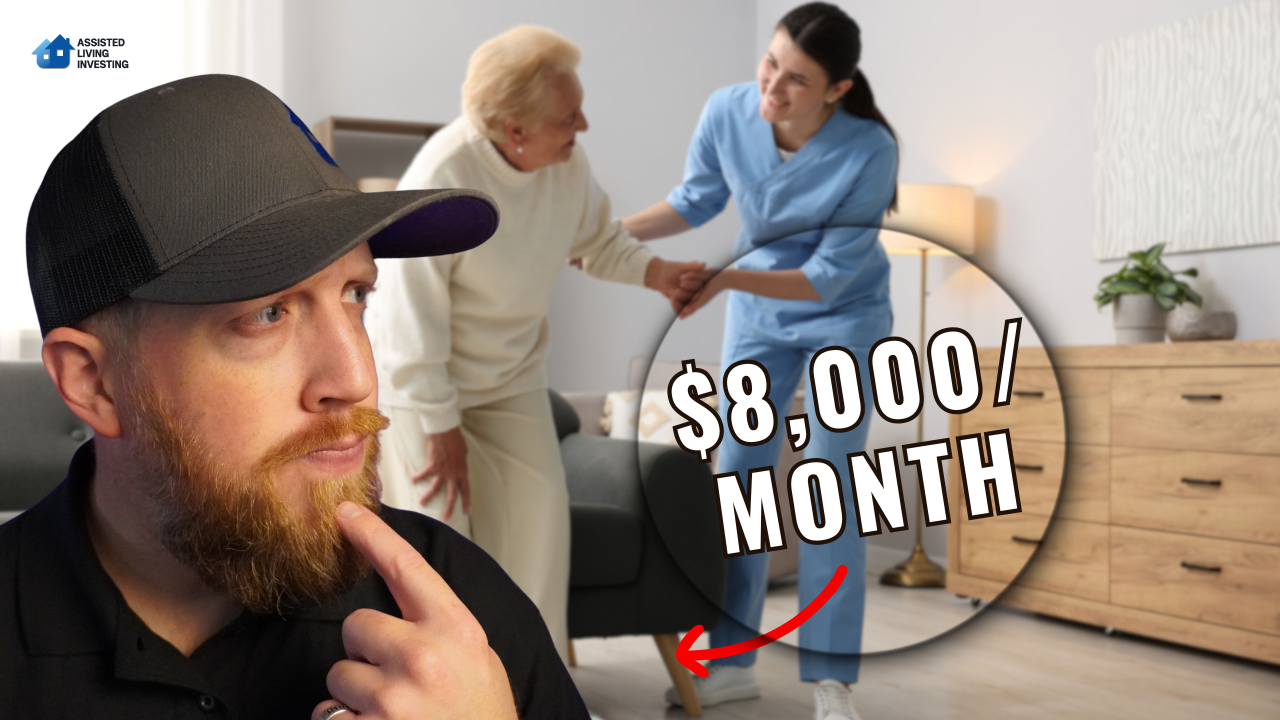
I’ve seen a lot of comments lately asking how $8,000 assisted living rooms are even possible, and if they’re ethical. I get it. The numbers can feel shocking, especially if you’ve never seen exactly how assisted living really works. In this blog we're going to break all of that down for you.
Want the full breakdown? Watch the video below👇
Medicaid is federally funded but run by each state
One of the biggest misunderstandings I see is about Medicaid itself. Medicaid is federally funded, but each state decides how the money is used and what the rates are. That means what works in Idaho may look different in California, Arizona, or any other state.
I’ve worked in healthcare since 2015, and I’ve seen this up close. States set fee schedules that decide how much a provider gets paid for specific services. Assisted living usually has one main all-inclusive code tied to care needs. That rate is not randomly selected, and it’s not a big shared bucket of money that can be used for other services.
✅ Medicaid is federally funded and state-administered
✅ Rates are set by the state, not the provider
✅ Assisted living billing is specific to assisted living care
What families are really paying for in assisted living
When you hear $6,000, $8,000, or even $10,000 a month, it’s easy to assume families are paying just for a bedroom. That’s not what’s happening.
Assisted living includes 24/7 staffing, help with activities of daily living, meals, activities, supervision, safety, and coordination of care. You’re not paying for one service. You’re paying for an entire system that supports someone every day.
I’ve seen families compare this to home health and think it should be cheaper. But when you add up hourly home care, it gets expensive fast, especially if you need consistent help.
✅ 24/7 coverage and supervision
✅ Meals, activities, and social connection
✅ Safety and immediate help if something goes wrong
Why assisted living is different from home health care
Home health can be a great option. I’ve seen it work well, and I respect the people who do that work. But it’s not the same as assisted living.
Home health is usually hourly. If someone falls when the caregiver isn’t there, there’s no immediate help. Assisted living has staff on site at all times. That difference matters, especially as health changes.
I always tell people this isn’t about which option is “better.” It’s about which option fits the resident’s needs right now.
✅ Home health is hourly and largely task-based
✅ Assisted living is continuous and community-based
✅ Needs can change over time
The ethical side of room pricing
Let’s talk about the part people don’t always say out loud. Yes, bad operators exist. That’s true in every industry. But that does not mean assisted living pricing is unethical.
You are running a business that employs staff, maintains a safe home, and cares for real people. Cutting corners hurts residents and staff. Doing it right costs money.
I teach people to be one of the good ones. Clean homes. Trained staff. Nutritious meals. Activities that bring joy. When you invest in those things, the pricing makes sense.
✅ Ethical care means investing in people
✅ Clean, safe homes don’t happen by accident
✅ Quality care costs money for a reason
💡 You get to decide the culture, the standards, and the experience in your home.
Residents always have a choice
No one is forced into assisted living. Families choose it because it solves real problems. Social isolation, safety risks, medication management, and caregiver burnout are real.
Residents and families compare options. Some choose home health. Some choose assisted living. That choice belongs to them.
As an owner, your job is to make sure you are the right fit and to help them transition if you’re not.
✅ Assisted living is not always the answer
✅ Care decisions should be resident-specific
✅ Good operators put residents first
Wrap Up
$8,000 assisted living rooms are not about greed. They’re about providing full-time care, safety, and support in a way families can trust. When you understand Medicaid, care levels, and real costs, the numbers start to make sense.
If you need help creating a business plan for your assisted living business, check out the Free Business Plan Checklist.
And if you’re ready to figure out your next step, join me for the next Roadmap Challenge, where I’ll walk you through how to get started.
Show full transcript 👇
Transcript
00:00:07
Hey friend, it's Brandon Gustafson with Assisted Living Investing. Super excited to have you here with me on the channel today. Uh, in today's video, we're going to be getting into uh a conversation I had. Actually, somebody in in one of the comments on YouTube had brought up uh this idea of uh you know, having $8,000 uh for for a bed. And this came out of one of my YouTube videos. cuz we'll link it up above for you that uh talks about how I have made $12,000 per room for Medicaid residents. And there's been a
00:00:39
lot of discussion around that. So, I wanted to address that here in this video. If you're interested in learning more about how you can have $8,000 rooms, you can do this all uh just like from a from a perspective where of just like how it works and also from an ethical perspective, especially in this world that we live in where there's a lot of politics going on and and other things that have been in the news lately in different states around uh around public and government type funds. I want
00:01:03
to kind of clear the air and make sure everybody's on the same page and help you understand this. So, if you're interested in learning about that, stick around for today's video. This is going to be a fun one. All right. Uh, also for those of you uh, you know, who don't know me, my name is Brandon. Welcome. Super excited to have you here. Uh, I with assisted living investing, I help first-time assisted living entrepreneurs launch profitable, purpose-driven businesses, creating prosperity, purpose, and peace in their
00:01:28
lives to help you make progress and and see that you are act you can actually do this. Uh, I do that through a few different ways. One, go take my quiz. Um, aliquiz.com. It's a 30-cond quiz. will give you some guidance on where you want to where you want to get to. But if you know that you want to jump in and and work with me directly, go check out roadmapchallenge.com. I'll tell you a little bit more about that at the end of the video. So, make sure you go and check out one of those links, but go go
00:01:53
take the quiz. It's the easiest way to do this. Aliquiz.com. All right, with that out of the way, I just need to make sure that I am actually live. Okay, good. I've got notifications saying we're live. Um, and let's hop into it. So, today again, I want to uh this comes from a comment on my one of my more popular videos. If you haven't watched it yet, we'll link it above for you, but it's how I got uh how I have been able to do $12,000 per room for a Medicaid uh working with Medicaid
00:02:22
residents. Uh so, you can do this and it's possible. If you want to learn all the details, go watch that video. Will help you out a lot. Now, I also want to just kind of address the elephant in the room. I know that Medicaid is different. across multiple states. So, what works for me in Idaho where I'm able to do this may not be the case in Arizona or in California or some of these other states that that you may be in. It could be the case. I know reimbursement rates in California are quite high actually
00:02:48
for the medical program that they have in in California. I I'm not I don't operate there though, so I don't know the specific rates. Now, I can if you're in my coaching programs, I can help you figure out what those things are, what the fee schedules are, how you can kind of shift through that. And if you're interested in learning more about fee schedules, just type in fee schedule down below and I can give you kind of a video, the overview of what fee schedules are. That might help you out
00:03:11
as you're trying to figure out how to get started here. [cough] [clears throat] But go watch that video. It'll tell you a lot about how Medicaid works and how I'm able to to get those types of reimbursement rates working with a Medicaid population. I also in this video, we're going to be talking about how there's just a misunderstanding of what Medicaid funding is and how it works specifically. So, I really want to clear that up. Um, the room pricing that uh that you can set and how that is going
00:03:36
to work and then what families are actually paying for when it comes to assisted living because there's so much that goes into this. And so, I really want to clear the air on that. Uh this video is meant to be hey let's get a lot of clarity and understand how uh how you can justify uh ethically, morally uh and financially a room that is 5 6 8 10 $15,000 uh for for rates on a monthly on a monthly basis. Okay? And we're going to compare that a little bit to what that looks like uh if you were to compare
00:04:09
this to like home health or or something else along those lines and why somebody might choose assisted living versus going with one of those other options. So with all that, let's dive into it. Medicaid uh we're going to start off with Medicaid. And I I've told you this a lot uh around Medicaid, but I know you don't watch all my videos. So I'm going to give you an overview of what Medicaid is. Again, Medicaid, it is a federally funded program. So, it it gets its budget from at a federal level. They'll
00:04:38
say each state gets a billion dollars or whatever. They they give you a round number. And then the state who receives that billion dollars, they have to they have to look at it and plan how are we going to use these funds. This is very simplified version of how this works, but they get a billion dollars from the from the federal government. They get it. They they say, "Okay, we need to do we need to do wick uh we need to do um SNAP food uh stuff. We need to do Medicaid benefits for people that are
00:05:03
getting older. We need to do Medicaid benefits for young children that are in the foster system." They they have to say, "Okay, how are we going to use this uh this?" And then they set those fee schedules that we just talked about uh just a second ago. Okay? So, it is fedally funded, state administered. That's how it works. And then depending on the state, you may have what are called third-party payers or thirdparty administrators. Uh oftentimes it's an insurance company and
00:05:28
they will kind of run the claims process. Sometimes the state does this, sometimes it's a company that does it or you may hear managed care organizations. It's the same thing. Third party administrator, TPA, or MCO for managed care organization. You may hear this. I'm throwing a bunch of acronyms at you. I know. Uh this is the world of healthcare. I've worked in it professionally for over a decade now. I'm very familiar with with how this works. All right. Um, [clears throat]
00:05:53
sorry, I had to run over to my daughter's school and it's cold outside and so I've got a little bit of a cough cough as I'm doing this just as my lungs are readjusting to the warm air. Uh, anyways, the way that a person will qualify for Medicaid is uh it's based off of a form of eligibility. This is set forth by the state and each state's going to have their own different requirements. It could be financial needs. It could be uh it could be care needs. It could be any uh degree of of
00:06:25
whatever standards they have set. That's what's going to allow an individual to qualify for Medicaid. This is not you as a as a provider. This is the individuals that you are serving. There will be a set of criteria that they have to hit so that they can become eligible to to get on Medicaid. And then they have to maintain that eligibility by showing proof. It's uh let me use an example that you may or may not be more familiar with, but um I think it's a little more common. Uh it would be unemployment. So
00:06:54
if you are unemployed, uh in order for you to continue receiving that unemployment unemployment benefit, you're going to have to certify that you are uh looking for a job on a regular basis. You've been applying, you've been interviewing, maybe you're going to job fairs, those types of things. uh you need to be putting forth an effort to find a new job if you want to continue receiving that unemployment benefit. It's somewhat similar to that. You've got to be demonstrating that you still
00:07:21
have a need, whether it's care need or financial or a combination of the two, that you still need um that Medicaid benefit. So, you're going to have to maintain that eligibility as as a resident, as a as a beneficiary of that benefit. the the the way that this works as a provider is you uh you say I I will serve you you know raise your hand you this is not dictated by anybody. You have to raise your hand and be like I'll I'll serve the population that that deals with Medicaid. You have to go
00:07:49
through a uh a certification process with the state. They'll have a a form. It's very similar to how you would get your facility license. Uh you're going to fill that out. You become a Medicaid certified provider. And then with each of those thirdparty administrators or MCOs's uh managed care organizations, you're going to have to get credentialed with each of them and contracted with each of them so that you can receive payment from them. So that's how it works on your end. Now, when you have
00:08:14
these two things and you have a resident who has Medicaid and you have a you are a provider that you can serve Medicaid residents. Um, when those things marry together, that means as a provider now I can bill for the services that I'm providing for this individual who is in my home. Okay, you use this doing billable codes. Um these codes codes are going to be based off of care needs uh largely um and specifically they'll be specific to the type of care that you are providing in that setting.
00:08:46
So as an assisted living provider there's really just one code typically um that's all-encompassing. Okay? So there I don't know what the code is in your state. It would be different from the one that's in my state. I can't even my dad handled our billing so I couldn't tell you what the code is for my state without going and looking it up. All right. But um those rates that you would bill uh per code for for each instance of care that you are providing is set forth by the state. They will say um for
00:09:14
every every time that uh you provide assisted living services, this is all-encompassing. We'll pay you $100 a day for that that service that you're providing for the care that you're providing to this resident. Okay. Um it it it it's specific to assisted living. This is not a general Oh, cool. somebody has qualified for long-term care in some capacity, they get a $100 per day that they can use for anything related to long-term care. That that that's not how it works. It is specific to the billable
00:09:44
event that has happened, the the type of care that has been provided. So, in assisted living, you have one co you have one code in most states, uh, one code. You bill that. Now, if a resident is also on Medicaid and they've got to go to the eye doctor or they've got to go do their uh you know, their their care their uh their doctor visit with their primary care physician or something like that, that $100 a day that you have, the that that doctor is not pulling from that. They have their
00:10:10
own billable code that they then send over to um to whoever it is um you know, the third party administrator, the managed care organization to to then take that and and they bill for us. So, let's say that they they have somebody come in um for an eye appointment um and their cost is, I don't know, 60 bucks for for that appointment to go see the eye doctor. They would bill $60 to that uh to whoever is managing that claims process and they pay that. They get $60. You still get a hundred for the services
00:10:42
that you provide. Okay? So, this isn't this isn't just like a big bucket and each person has $100 a day of and that's all the care that they can receive. it is based off of the different providers and the different care that's provided. Okay, hopefully that clears things up a little bit, not a general bucket very specific to what it uh to to the care that is provided. Those codes, those rates are set by the state as well. Hold on, I need to take a drink here. This is the trouble of doing things live
00:11:10
like can't edit these things out, right? So, if you are sympathetic towards me, give me a like, please. helps out, helps grow the channel, makes other people see this. Uh, and I do these lives for you because I I think it really helps you out and and seeing how this stuff works and you can join me. Uh, I don't do as much of the Q&A as I as I used to. Uh, but I do try to keep an eye on my chats. So, I got somebody hitting here from Detroit. Uh, that's awesome. And then just took the admin class working on
00:11:41
final hours for the test. I love it. Good job. That's great. Uh, thanks for hopping on today. All right. Uh, let's keep going here. uh payments from Medicaid, and I talked talked about this a little bit, but the payments from Medicaid, the way that this is going to work is it's going to cover everything everything that you do. So, um there there's going to be a piece in some states, this is how it works for for my states, but I know this is different in other states. Um there's what we call a
00:12:07
rough RUF. This stands for rent, utilities, and food. We collect that directly from our residents. They get social security income. we are able to collect um a portion of that. It's 85 to 90% of it. We get to collect it. Whatever is left over, they can spend on whatever they want. And then the rest of that that is build over to um to to to the state for Medicaid is going to cover things like the care that's provided, the food, the activities. Uh everything that is is paid to you is going to be
00:12:39
all-encompassing in that combination of payments. whether you're receiving anything from the resident themselves or if that money that they receive just automatically goes to the state um through a process that never touches their bank account, just goes directly to the state and then you get to reimburse get reimbured for it. However it works in your state, you're going to be able to get that uh get that money and then it covers everything. So, you're not charging extra services. In
00:13:06
fact, in most cases with Medicaid, uh adding additional services can be really tricky. Um so it's something you want to pay attention to. Uh they need to be something that is just like outside the purview of what you would typically offer to any other resident. And it has to be optional. So if you were to bring in, I don't know, let's say you brought in uh an aesthetician, uh I'm pretty sure I said that wrong, but you you know what I'm talking about. Somebody that will come in and I don't know, maybe
00:13:31
they're going to do nails or you got somebody that's going to come in and do hair. Maybe you have an agreement with them that says, um, you know, you have your rate, it's $50, we get to collect $20 for every haircut you do or something like that. Um, but that's totally optional, right? Uh, so if that's the case, then the resident can determine, yes, I want to pay for that, and then you have an agreement set up with with this person. uh you could you could build that into it, but the the
00:13:58
services that you would provide that you could get maybe additional income from a resident has to be optional uh something that they choose and they already are on limited funds. So they may not be able to do much um by way of additional services. Whereas if you are working with a private pay population, then that uh that could open up doors to add additional services. So Medicaid, you're going to be a little bit hamstrung when it comes to that. Okay, that's Medicaid. I wanted to make sure we just had a
00:14:25
quick base understanding there uh of what that looks like uh so that you know what you're getting into. Now, let's talk about this is another thing and this came out of the comment. Um, and the individual who who commented this, I can't I'm going to kind of paraphrase, but they were wondering why uh why somebody would pay $8,000 a month or 6,000 in in in my case for assisted living services when they could get maybe uh better quality of care if they were to go and uh work with home health
00:14:54
and have somebody come into their home as a family member. Maybe I have an extra room and I put it in there and I can um I I can I I can have a home health person come in and take care of them. Why would I not do that? Why would a resident not do that? Um and then like I've had a few comments on there that are like, is this a a Minnesota thing? Um where uh if you're up on current events, there's been some fraud allegations around Minnesota government and and how uh reimbursement rates are
00:15:23
working uh around daycare facilities. Uh that's a very simplified version of it. Um and so I get comments from time to time like is this is this one of those situations? And I will tell you no uh absolutely not. But I will also caveat that and say that bad facilities, bad operators do exist in this space. So could it be happening with somebody? Sure. I do not do that. I highly encourage you not to do that. Um but could somebody be doing it? Potentially. Could somebody be, you know, cutting corners or uh maybe not offering all the
00:15:58
services that they should be offering to a Medicaid resident because they're a lower class uh type of a of a resident. It could happen. You should never ever do this though. These are individuals. These are people who need care. They are putting their trust and their lives in you and you should treat them that way absolutely 100% of the time. No questions asked. It's how you should be treating these people. It doesn't matter if they are a private pay resident who's paying you $15, $20,000 a month. uh for
00:16:24
the services or if they're a Medicaid resident and all you're getting is $3,000 a month. I don't care who it is. You should be caring for these people and loving them and giving them everything that they need. Full stop. Like that's what you should be doing always. Okay? Now, some people will not do that and please don't ever be that type of a person. You should be one of the good ones. You should be doing this stuff. This is what I teach you to do u in the book and in my courses and things
00:16:49
like that. You should be one of the good ones who is prioritizing safety and cleanliness and uh the the quality of care that you're providing. You need to be doing that. And that can involve having this be kind of expensive because you're investing in your staff. You're making sure you have highly trained staff. You make sure you have adequate volume of staff that they can be there and they can help people out as as they are running through uh just a very difficult time in their lives. You need
00:17:16
to be investing in staff so they are comfortable and they want to stick around and and and and continue, you know, working with your residents. This is super important for you to do. You need to have a clean facility and that could be, hey, maybe you hire somebody that can come in and and do a little bit of maintenance and and maybe do a little bit of the housekeeping stuff inside of the house or you have your your other staff that are taking care of this for you. Um, but you need to have a clean
00:17:40
facility. Um, and this is also, I've got to be honest, how you set yourself apart. This is how you can really uh get in there and and establish a foothold in the marketplace because you are a clean facility that provides high quality of care that has fun activities and h and provides nutrition nutritious meals. You should be doing all of these things when you are running your facility. You really should. And it does come at a cost, but that's why I tell you to spend time underwriting your facility,
00:18:08
underwriting your opportunity, and making sure that it's going to work for you financially. So, if you don't already, get over to assistedlivinginvesting.net, grab the free underwriting calculator. It's just right there, light blue box at the top of the page. You cannot miss it. Go grab the calculator. And while you're there, take the quiz as well. It's just right below. It's a dark blue box. 30 seconds. Take the quiz. Would love to have you do that cuz it lets me know how I can help
00:18:30
you out. and I'll send you some details on the different programs I have that can really help you make some good progress including the roadmap challenge and I would love to have you on there. Okay, now comparing this is the other piece of of what the person that was commenting was talking about is why not home health care why not have a nurse come into the home versus assisted living. So, I just talked to you about the importance of what you are doing and and how you should, excuse me, you
00:18:57
should be one of the good facilities that is providing this excellent care, nutritious meals, fun activities, clean environment. You should be doing all of those things. Um, I I I I it hurts my heart every time I hear somebody that says, um, you know, I I I could do this better from somebody else. And the reason why I want to do this is I was looking at this and my my grandma was in a facility and it was just a horrible experience. It was dark and dingy and like they all just had macaroni and cheese all the time, you know, just like
00:19:24
a horrible experience. And I don't want you to have a facility like that. This does not mean that you have to have a mansion and you have to have like this this huge goddy home that is just like perfect and and everything like that. You don't have to have that, but you should still have a high standard of what type of care you are providing uh to meet the needs of your residents. Okay. Now, I also want to specify that assisted living and home health is not the same. It is you're oftentimes
00:19:53
serving the same population, especially if you're working in elderly care when you're doing assisted living. And a lot of what I'm saying here is related to that, but I also realize that there are a lot of different uh types of care you can provide in assisted living. Like I worked with a home that was mental health. Uh somebody in one of my programs is is doing disabled uh adults. Um you there's just so many things. I was recording a podcast earlier today with somebody that's going to help you
00:20:17
guys out with finance. Um, so make sure you stick around, subscribe, ring the bell so you get notified cuz this conversation, his name is John Newfer. Uh, just an excellent conversation. So, I want to plug that and like you're going to learn so much about how funding works and that you don't have to go the SBA route and if you get told no by a bunch of lenders, there are different ways to do this. So, make sure you do that as well. Um, but this is assisted living and home health. They're not the
00:20:42
same. They're different. All right. Um, in a nursing inhome nursing, home health care as I like to call it because it's just an easier way to do this. Um, the cost of that can add up fast. This is why a lot of people don't do that. I have um grandparents right now that are in their mid80s and they're not in an assisted living home. They they live at home. Um, and right now they're at an age where my mom and her siblings have very have been having a lot of conversations about, well, should we put
00:21:12
mom and dad in a home? Um, or should we do home health? And they've opted to this point to just do home health. But it is very expensive to have somebody come in for an hour to 4 hours, however long they need them to help out with bathing things or maybe it's medication management or physical therapy type uh, things. It's very expensive to have that person come in. It doesn't mean that you shouldn't do it. I think it's an incredible option. I have a um uh my grandpa who I'm just telling the story
00:21:44
about. His brother um did home health. This is what he did. He was very successful with it and he retired uh just a few years ago. So I love the idea and the model of doing it. I think it's great. But as a consumer of that, if I if it's me, my loved one, it is very expensive to do in home healthcare. the costs add up and it's the other thing is there there's no extra things like activities or food or things like that. It is strictly the care that is provided. Um and it's it's based off an
00:22:14
hourly rate. It's very expensive. And so yeah, maybe I have I have a bucket of money that I can use to to pay for somebody there. Uh but when it comes to like Medicaid and things like that, you're going to find a lot of the same things when you're dealing with this population uh where they're where they're Medicaid um that they don't have that benefit or because it is nursing care, there might be a Medicare benefit. I'm honestly not 100% um sure on that one. Uh that's something I would have to
00:22:40
look into. But anyways, the the funds the those Medicaid funds, let's say they're on Medicaid and um they've this is not a big bucket of money that just can be used for any type of care. It is specific to that population. And I've talked to a lot of people that do home health and they they won't do Medicaid because it is too complicated. one of my students um she has a home health agency actually right now and that's something that um they they do Medicaid but talking with her it's been a pain to get
00:23:13
to the point where you're certified and and reertification once you do it it's it's fine uh it's it's easy to maintain this the same thing with assisted living but it's also like extra paperwork and things that you have to avoid and I have heard from enough people that do home health that I feel like the Medicaid process for home health is far more um uh burdensome and uh there there's just a lot more paperwork when it comes to that compared to assisted living. That's
00:23:37
just my uh perception on this. Just somebody that's not done home health but having conversations with people. So you don't have this big bucket of of money that can be used for some of it to home health and some of it to uh assisted living. it's one it they're they're separate codes and and so if you've got um somebody that is in assisted living and they need some assistance um they they could have home health come in uh with that benefit uh but it's just it can be a little bit uh confusing and it
00:24:07
can be it can be hard. Um the the cool thing about assisted living is you get to do um all of these things. This is how you kind of set yourself apart when somebody says, "Well, why don't you just do nursing, you know, in home care?" Uh, it's because in assisted living, you are you people don't don't understand the cost of of nursing care inside of their home. Nurses are more expensive than assisted living. And you have all these extra features and amenities. There's the social aspect.
00:24:35
You have more residents there. You've got um, you know, you've got food that you're providing them in activities like multiple activities per day. uh your 247 coverage. So, in case something does happen, um in the event that you have nursing, like a home health person uh that that's that's helping you out, if you fall when that person's not there, then you've got to either call an ambulance or you've got to wait for them to get there. Whereas in assisted living, you always have somebody there
00:25:03
that can help you out. They can help you pick you up when you fall. Um, and if you do have an emergency, they can still call an ambulance or they can make sure you get to the hospital on time. Um, it just there's there's so much more and it's it's less expensive than than in home care. It just it is uh because the level of care that you're providing is is much less. So, this is why you should this is why I think assisted living is a great option because um you get great reimbursement rates and uh you don't
00:25:31
have to provide that higher quality of care and you don't have to deal with that when you're working with a nurse um at the level that you are with in home care or in a nursing home. uh it just becomes more expensive because rightly so they are much more specialized and uh have a level of education and expertise that they should be they should be compensated fairly for the type of stuff that they're doing. So if you're a nurse, thank you so much. But I just want to explain that assisted living is
00:25:59
not nursing care. Uh it's it's different. And so you just need to understand that as you get into this. And so the rates and and the way that all of this is going to work, it's not the same. Um it's it's very different. So I I I hope that's coming through and and clear for you and you're getting this. Uh now I do want to also say here that your decision here um the decision for this is speaking to those of you who may be watching that are trying to figure out which uh option you should be going
00:26:28
with nursing, you know, in in home care, home health, uh nursing home, assisted living, independent living. Um, I'm going to boil this down to home health and and assisted living, but I think this applies to everything. Um, assisted living is is not always wrong there. This is not b this is not blanket statements. Okay, this your decision should be resident specific. And as a an owner, I also want to pay attention to this because I should be making sure that I am meeting the care needs of my
00:27:02
resident. If that means they should be in a different care setting, I should be setting them up for a a good spot so that they can receive adequate care and and feel loved and and and know that everything is going to be okay for them. So, that's my responsibility as an owner and an operator in this business. I should be making sure that everything's okay. So, assisted living is not always wrong and home health is not always better. um it just it's not um maybe because you're just losing out on on
00:27:30
some of those fun funner aspects, the social aspects, the food, the uh the activities and things like that. So, home care is not always better. It could be, but it's not always better. And I would also say that needs th those those needs of the resident they are going to change as health adjusts as it declines as it improves as as things uh just kind of go through the cycles of of of life and and the experiences that you're having working just kind of as health is declining and you're aging. You have
00:28:01
these different varying levels of of what that's going to be like for you. And so, um, those those you you should be also aware of those needs of residents as you're trying to work through this and help them out. Excuse me. Residents should always be evaluated according to where they're at and they should always be evaluating all their options. So, this is kind of a two-way street. I would encourage them, this is why you have care coordination conferences with the resident and or their families and a nurse and their
00:28:37
doctor and you as a facility owner. You should be doing this to just assess are we still the appropriate care setting and sometimes it's a very easy yes. Sometimes it is not uh so readily apparent and it could be that the person is declining in health but they don't want to take them to a nursing home because it's too expensive. And so bringing somebody in for home health at that stage so that you can have them in your home, your loved one in your home and you're helping them out that can be
00:29:04
such an incredible experience when they are getting to end of life. And so that might be the thing that you need to shift over to. Or maybe you want to keep them on in the assisted living facility and you put them on hospice care and hospice is coming in and helping out. uh or maybe even home health can come into the facility and help out with that specific resident. They can't do the other ones, but they can work with that specific resident. So, there's different options for how you can do this and you
00:29:26
should be looking at and evaluating your residents and and seeing what they are needing and evaluating your care plans according to that. Um, so this is really really important that this the decision that you make as an an owner and a decision that your your resident makes needs to be specific to them. And while you should yeah, you don't want to lose them, you should also have their best interest in mind all the time. Uh, every single time this is all about the residents, everything that you do. Now,
00:29:56
as an operator, you get to set the tone for what this is going to look like um in your facility and how you're going to um differentiate yourself. I see this so much with people where in my comments where they're saying, "Oh, yeah, just like slum lord type of a thing and and just you're doing this for all the wrong reasons and the money and blah blah blah and um you know, why why don't you do do this for free?" And it's because, you know, I'm not only I'm running a
00:30:26
business. Yeah. And I I want to make money from it. Yeah. But I'm I'm providing so many people with livelihood, right? My residents, uh peace of mind to my the family of those residents, my staff, their families. I'm providing jobs. I'm providing a whole just gamut of of opportunities here for people. And uh that's another big reason why I love assisted living is the impact that we get to have in our community. and we get to set the tone as as an operator and how we're going to have an
00:30:52
impact in the places where we work. Um, our leadership is what's going to drive the culture and the standards and we get to set that. It's really cool uh to to see what that's going to look like in our facilities and and how how we get to impact that. Um, and the facility will also um reflect the priorities that we have as an owner, as an operator. So, if I want a home that is clean and has fun activities and um is uh is, you know, just a joy to be, you walk in and it it feels pleasant and and excited and and
00:31:27
doesn't feel dark and dingy and we're doing nutritious meals. I get to decide that that's what I want to do and that's what's cool. You get to do the same thing. You get to be like, I I want this incredible facility that people walk into and they're they love it and and their families walk in and they love it. Um, you get to decide that. This is really cool. So, yes, you could be one of the bad ones that we just talked about a few minutes ago. You shouldn't be. And you get to design what you want
00:31:54
it to be. And that is just so cool that that you get to do this and have an impact on people's lives. Um, all the cleanliness, all the activities, all of those things, they are super important. They set you apart. They allow you to bring in more residents into your home, make them happier and healthier, and um, they just have a wonderful experience. And so I just yeah, I I I love it. Um I hope I hope that was that all makes sense. I I kind of I feel like I bounced around a little bit, but I just wanted
00:32:20
to really address this because this is something that uh has been on my mind. I've been seeing a lot of comments around it. And I just want you to understand that yes, there are bad actors. There's always going to be a bad actor, but this is you don't have to be that. And you can set this up in an incredible way that really gives back to your residents. And the amount of money that they pay, they get to decide. It's their money. They can choose what they want to do with it. They could do home
00:32:43
health. It's fine. It's going to be more expensive. It will. Um or they can come to your facility and they can have a bunch of extra things. They get to choose. You are not removing their ability to choose what they want to do. And that is something that's really cool. Okay, with that, I just want to remind you as well. I talked about this at the start of the video. Just wanted to recap. Um we talked a lot about um just what this looks like uh working in a facility. We talked about Medicaid. We
00:33:09
went deep on that. Uh the and some of the misunderstandings that I think exist um here around Medicaid and funding and room pricing and what assisted living is versus home health. So I I hope you found that valuable. If you did like the video, subscribe, ring the bell as well so you get notified, especially for this one podcast we have coming up. Uh it's [clears throat] going to help you out from a financial perspective. I think you're going to love it. And I would love to have you in our next roadmap
00:33:32
challenge. We just did one uh last week actually. Programming note on the weeks that I do challenges. I will not be doing lives those week because I am pouring into people there. It is an all day event. Um this one we we did it in one day. Uh we were together for about 6 hours and it was so much I lost my voice but it was so much fun. I loved it. If you would like to join us in our next one, go to roadmapchallenge.com. It is an incredible way for you to get in here and ask me questions like specifically
00:33:58
about your situation and I can answer them. Uh we have a community for the duration of of the challenge as well. Like it's just a fun experience. I would love to have you there. Go check it out. Again, it's roadmapchallenge.com. Please join. I want I would love to see you there. Um, and if you don't already have the book, then go grab that. Uh, the profitableass assisted living facility. There it is. Um, thebook.com. Go check that book out. Will help you out as you're trying to move things
00:34:24
along. Um, like I have just this little sneak peek. If you are still here, type in book u just to let me know and I'll also make sure you get the link for it. Um, but I just finished the recording of the audio book. I'm working on doing the editing for it and I was reading through it. I was like, "Oh my gosh, there's so much good in here." Like I know I wrote the book. Um, but it had been a few months and as I read it, I was like, "Oh man, there's some really just amazing
00:34:49
information in here." So, take advantage of that to help you out as you're trying to move forward. And if you're not sure which of my programs or if the book is right for you or anything like that, uh, go take my quiz. It doesn't cost you any money. It takes 30 seconds. aliquiz.com uh will help give you some guidance as you're trying to move forward and and figure things out. So uh yeah, thank you. Uh the way that your handle is uh Ayana, I'm guessing go to the alibook.com.
00:35:16
You can get the book. Um and uh Papa Greco, same thing. We'll put it here in the chat. Thebook.com. Um so go grab the book there. Uh it it's just got so much uh just so much good information in there for you. Uh thank you guys for being here in the chat. Um it's always so much fun uh to to see where you guys are at. So uh let's see. Gina, uh you've been watching the videos and lots of notes. I've been watching for about two months now. Awesome. I love that. Thank you so much. Uh thank
00:35:46
you for [laughter] uh thank you for just like hopping in here, joining. I I I I love doing this. It is one of my favorite things to just be here helping you all out, uh, answering questions. Uh, the more you comment in the videos, it gives me more ideas. I have just this huge backlog, but I try to get good comments and do those videos as quickly as I can to make sure that you're getting help. But the best way, honestly, for me to answer those questions is to join me in the next roadmap challenge. So, go check it
00:36:15
out, roadmapchallenge.com. Uh, would love to have you there. Are you curious about assisted living, but you're not sure how to get started? At assisted living.net, I am here to help first-time assisted living entrepreneurs launch profitable, purpose-driven businesses, creating prosperity, purpose, and peace in your lives. I love doing this. It is so much fun for me to just be in here interacting with you guys, coaching you, and helping you make progress cuz I know how hard it can be. I've I've been
00:36:39
there. Um I I know what it's like to just feel like I don't have the funding. I don't know what I'm doing. And I want to remove those roadblocks for you so you can feel confident in moving forward. get some clarity on what you should be doing and get some confidence so you can really move forward, get focused and um and get where you're at. By the way, that's a little meta. So, if you join the road map challenge, you'll know exactly what I'm talking about when it comes to clarity and confidence and
00:37:04
getting in the focus zone. So, join me there. Would love to see you there. Um, and I just want to remind you and encourage you that it doesn't take a lot, just a little bit. Just keep going step by step by step. And I promise you, if you do and you are consistent and persistent, you are going to be successful. Thank you so much for watching and we'll see you next time.
Download Your FREE Calculator
Stay connected with news and updates!
Join our mailing list to receive the latest news and updates from our team.
Don't worry, your information will not be shared.
We hate SPAM. We will never sell your information, for any reason.