
Medicaid & Assisted Living: How It Really Works (And What You Should Do Next)
May 20, 2026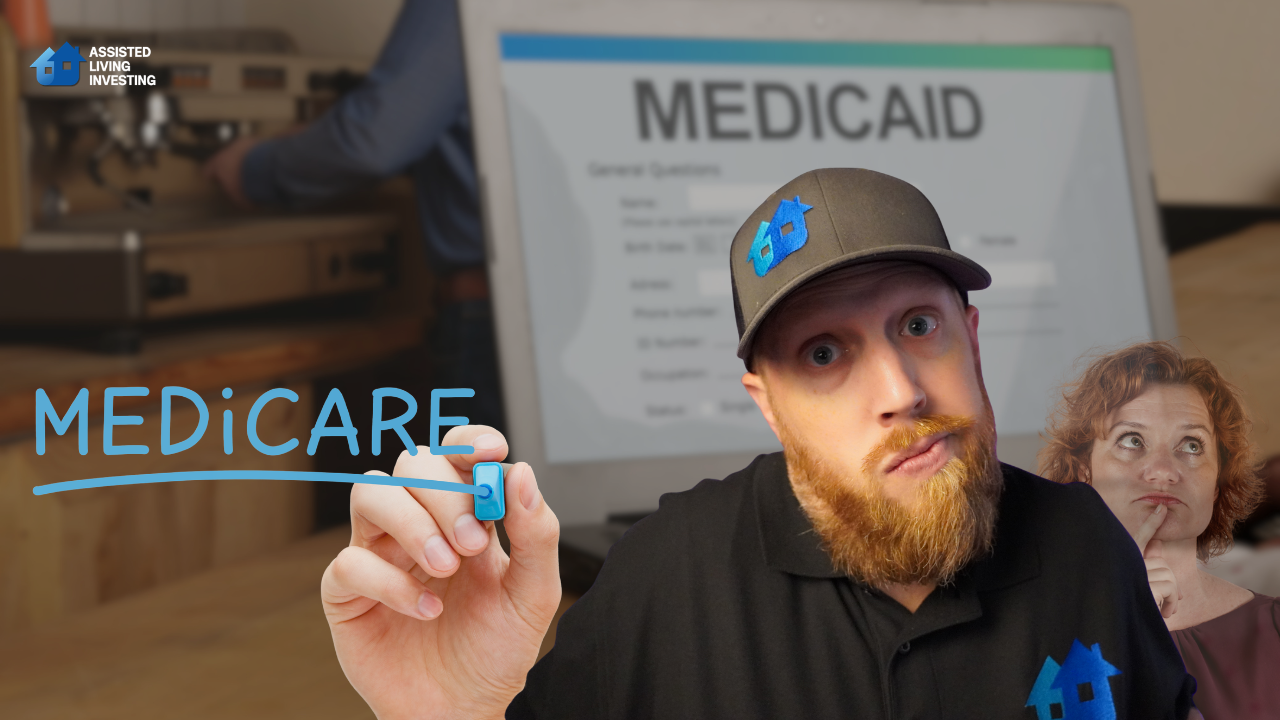
Trying to figure out Medicaid can feel confusing. You might hear news that makes it sound risky or unclear. I’ve been there, and I want to make this simple for you.
Want the full breakdown? Watch the video below👇
Medicaid and Medicare are not the same thing
A lot of people mix these two up. I see this all the time, so let’s make it clear.
Medicare is for medical care like hospital visits, doctor appointments, and prescriptions. It usually starts around age 65. But here’s the key part: it does not pay for assisted living.
Medicaid is different. It helps people who don’t have enough money to pay for care. And this is the program that can cover assisted living, depending on the state and the situation.
✅ Remember this:
-
Medicare = medical care
-
Medicaid = long-term care help (like assisted living)
Medicaid is still here, and it’s not going away
You may have heard that Medicaid might disappear. I don’t see that happening.
I observe an increase in focus on the program. There might be stricter regulations implemented to minimize fraud and waste. However, the demand for care is rapidly increasing, particularly due to aging populations.
From what I’ve seen in my own facilities, Medicaid is still strong. In fact, it may even grow over time.
💡 My take: Don’t avoid Medicaid because of fear. Learn how it works and use it the right way.
How Medicaid pays you as a provider
This is where things start to click.
Once you are approved as a Medicaid provider, and your resident qualifies, you can start getting paid.
Most of the time, payment works on a daily rate.
For example:
-
$100 per day
-
30 days = $3,000 per month
Some states also let you collect part of the resident’s Social Security income. Others bundle everything into one higher daily rate.
Either way, the system is predictable once it’s set up.
✅ What needs to happen first:
-
You get credentialed as a provider
-
The resident qualifies for Medicaid
-
You contract with the right payers
Your rates depend on the level of care you provide
This is one of the most important parts, and many people miss it.
Medicaid does not pay everyone the same. The more care a resident needs, the higher your rate can go.
If a resident’s condition changes, you can reassess them. If they need more help, you can submit that and request a higher rate.
But there’s a rule here.
You must document everything.
💡 Example:
-
More help with bathing
-
More medication support
-
Two-person assistance
If you can show the care, you can justify the rate.
I’ve seen rates go from $60 a day to over $180 just by documenting properly.
Documentation makes everything easier
I can’t stress this enough. Documentation is your best friend.
When you track care the right way:
-
You can raise rates
-
You pass audits faster
-
You avoid payment issues
In my early days, we used basic tools, and it was messy. Now, with proper systems, audits take minutes instead of hours.
✅ Focus on:
-
Care plans
-
Daily notes
-
Regular assessments
This is what keeps your business running smoothly.
Should you accept Medicaid residents?
This is the big question.
My honest answer is yes, if you’re willing to learn the system.
Medicaid can give you:
-
Stable occupancy
-
Long-term residents
-
Predictable income
Private pay residents are easier to start with. Less paperwork, faster setup. But they can leave if prices change.
Medicaid residents usually stay longer because their care is covered.
💡 The best strategy I’ve seen:
Have a mix of both.
This gives you stability and flexibility at the same time.
Wrap Up
Medicaid may look complicated at first, but once you understand the steps, it becomes a powerful tool. I’ve seen it work again and again when it’s done the right way. Start simple, learn the process, and build from there.
If you need help creating a business plan for your assisted living business, check out the Free Business Plan Checklist.
And if you’re ready to figure out your next step, join me for the next Roadmap Challenge, where I’ll walk you through how to get started.
Show full transcript 👇
Transcript
00:00:02 - 00:00:54
you are trying to figure out Medicaid. Uh you're wondering, you know, does this still work? Are I've seen a lot of things in the news around Medicaid. There's a lot of negativity around that. There's a lot of like just government noise and and things about Medicaid and also the process. I don't know if it actually is going to work. This video is going to be for you. I have designed this. It's something I talk a lot about here on assisted living investing where I'm helping you understand how to get
00:00:29 - 00:01:17
started and understanding and kind of removing some of the roadblocks around things that are complicated like Medicaid. So, this video is what we're that's what we're going to talk about today is Medicaid, how to shift around that, how to make sure that you understand it, if it's going to work for you and if you should be pursuing it. So, hey friend, my name is Brandon Gustafson. I help healthcare workers. I help health care workers start their own assisted living business so they're not
00:00:53 - 00:01:43
stuck trying to figure out and know exactly what to do next. If you need some help with that and you're trying to figure it out, you're in the right place. We're going to help you out with that today, help you make some progress and help you move forward with it. Uh super excited to hop into this with you today. Again, we're talking about Medicaid today. And the things that I really want to hit on are Medicaid versus Medicare. People use them interchangeably. I want to make sure
00:01:18 - 00:02:14
it's very clear to you what those things are and and how they differ. Uh I do this every time I teach this because I want it to sink in. Uh there is a difference between the two programs. Uh we want to talk about how Medicaid payments actually work. So we're going to hit on that today and then we'll talk about Medicaid rates are going to depend on the level of care that you are providing to your residents and should you accept Medicaid residents. The other thing I just I saw this as a question
00:01:46 - 00:02:45
that came out like just like in the last week. Um somebody was watching one of my videos on Medicaid and asking, "Can you like is this still a thing? I heard Medicaid's going away." And I was talking with um a friend of mine about this um sometime in the last week. I can't remember. I think it was on Friday. I actually had some some guys that were coming to my home and and working on uh a new air conditioning system. and I was talking to him about it and we were talking about the process
00:02:15 - 00:03:10
of Medicaid and there's there's definitely I think you if you've seen current events there's a lot of things in the news around corruption and and and different things around Medicaid and people taking advantage of it and businesses that are being set up with Medicaid programs and and and things like that and there there's there's a a microscope on Medicaid right and because of that microscope I think people are thinking oh the program is going to go away. Uh it's it's gotten in front of
00:02:43 - 00:03:41
the Trump administration. They're going to hunker down and they're going to they're going to remove the program in its entirety. And I I really don't think that that's the case. What I do foresee happening, I could definitely see this um in the way that this administration is is is working on things, is there could be a shift over uh the next year or two where they start looking more closely at Medicaid programs and making sure that there is less fraud, waste, and abuse, which I think is a good thing
00:03:12 - 00:04:10
overall. I think that's something that should be removed because uh when there is fraud, waste, and abuse in a program, it just it it um dilutes it u for the people that really need it. I do not think that this program is going away though. Um I if anything, I I could see Medicaid continuing to expand um and continuing to be a thing. And you have to realize with American politics at least that there is a pendulum. And so if something were to happen with under this administration where they tighten
00:03:41 - 00:04:43
it up really really tight, uh it will swing back the other way. And so um overall, I I don't think you need to worry about it. I think Medicaid is still a really good program. Uh we work largely with Medicaid in our facilities and I don't think it's something that you should be that concerned with as you're getting into it. So I just want to uh lead with that uh and make sure you understand that. Now, let's hop into Medicare versus Medicaid. Now, Medicare, let's talk about that one first. It is a
00:04:12 - 00:05:14
federally funded program. It's a federal program. Um, it is generally for people that need um hospital uh type care. It's it's more um clinical type of care. It is a benefit that is typically most of the time based off of age. There are younger people that can can get on Medicare, but typically it's around the age of 65 that people will qualify. They can get on Medicare plans at that point or Medicare Advantage plans. And those plans, there's there's three main parts to it. There's a part A, which is going
00:04:43 - 00:05:43
to be your inpatient stays. So, uh, if you had to go into a hospital, you had to stay there for a period of time, you had to go to a nursing home, stay there for a period of time, that is part A, it's your inpatient. Part B as in boy is your outpatient stay. So that's uh that's something like hey if you had to have a quick surgery if you had to just go talk to your doctor um that is part B it's your outpatient care and then part D as in dog is for prescription medications. Okay now in the world of
00:05:13 - 00:06:18
assisted living you could definitely have a resident and we do we have multiple residents that are on Medicare. We as an assisted living provider are not able to bill Medicare for those services. Medicare. There is no assisted living benefit on a Medicare program at least as of the recording of this video. You know, that could change 5 years from now, 10 years from now from now. But there is no Medicare u benefit that covers assisted living. And the reason for that is assisted living is not clinical in nature. There are certain
00:05:46 - 00:06:51
things that we do that are clinical um such as medication management, but as a whole, we are not um diagnosing people. We are not u providing that that level of care. um that that that a person would receive if they went to a doctor. We don't provide that care. Our residents may need that care and they will go to a doctor for that care. We may have a nurse come in who for the services they provide could potentially bill Medicare, but the services we provide in assisted living are not at that level. Medicaid on the other hand,
00:06:18 - 00:07:14
it is a federally funded program, but it is administered at a state level. So funds come down from a federal level. they're given out to the states. This is a very high level, right? Um there's a lot more intricacies to this, but the federal funding comes down to a state level. The state says uh or the state also can uh can increase funds through taxes and things like that. Um they say, "We have a billion dollars, um in funds we're going to use for Medicaid." Um and then they identify uh the different
00:06:46 - 00:07:47
programs that need to exist and the different benefits that they're going to offer to their Medicaid beneficiaries. the the the residents who are qualifying for Medicaid, the types of things that they can qualify for. So, you may see things around like um the WIC program um which used to be food stamps. Um you can see things around like um uh kids that are in the foster system or uh that are adopted. Oftent times they can have a Medicaid benefit where it helps out uh with their care, uh can help out with uh
00:07:17 - 00:08:19
food and things like that. And there's oftent times going to be a waiver program that the one I've seen the most frequent is elderly, blind, and disabled. So, it kind of covers a gamut of of people that are going to need care. These people are the ones that could have an assisted living benefit on it. That um specific waiver program that a person qualifies through um either their age or uh some type of financial event or life event or something like that. and they have to maintain that Medicaid certification or that Medicaid
00:07:47 - 00:08:48
um benefit by proving that hey I still don't have enough money. It it's very largely financially driven um and as long as they can maintain their Medicaid status as a beneficiary then then you as a provider as long as you are contracted and and credentialed as a provider can work with them and get reimbured for it. Okay, this is how uh how that works. And so not every they they are specific waiver programs that a person is on. I'm getting I'm getting a little bit in the weeds here, but I want you to understand
00:08:18 - 00:09:18
the difference between Medicare and Medicaid. You could have a resident who is on Medicaid that then qualifies for the benefit for assisted living under an elderly blind and disabled waiver or some equivalent in your state. And then you as a as a Medicaid provider, if you if you get approved as a Medicaid provider, you go through the process and you fill out the application and they say, "Yep, you are a credentialed Medicaid provider." Then you contract with the different payers that exist.
00:08:47 - 00:09:49
We'll talk about that here a second at the end of the video. Um, then you can receive a a Medicaid resident into your facility. you can care for them and then you bill Medicaid and they will pay you for those services as long as everything lines up. This is where Medicaid can get really confusing is there's a lot of pieces that have to fall in together, but once they do, then you have this really nice process of of bringing people in uh in and and you're helping people out. Okay. Um I'm hoping this is
00:09:18 - 00:10:00
all making sense. Okay. And we got a comment here. You know, thanks because you're going to be starting both soon as an assistant in independent living homes and the intel is helping. doing so good. I'm I'm glad uh I'm glad that's helping. If you have any other questions, just like chat them in here and I'll I'll keep an eye on the chat. Uh anyways, so that's Medicare and Medicaid. That's what those programs look like. Now, let's let's dive a little bit deeper
00:09:39 - 00:10:33
into Medicaid so you know exactly how this works. The way that this is going to work is you become a credentialed provider. Like I was just saying, that means there's an application process. It's going to be very similar to when you become a licensed provider. You're going to have to fill out some paperwork. You're going to have to provide tax information, bank information, um legal, you know, paper structure, your operating agreement, your EIN letter. Uh these just legal documents you're going to have to to
00:10:07 - 00:11:09
hand over. You're going to have to fill out an application. You're going to hand those things in. Okay. The resident on their side of things has to qualify for Medicaid. They have to show proof of funds. They have to continually maintain that. Um and that can lapse. And so as a provider, it benefits you actually to be familiar with the beneficiary side of Medicaid and understand, hey, are are they getting close to the time when they have to renew? What can we do to help them? So, because if they lapse, their
00:10:37 - 00:11:37
benefit laps, uh you're not going to get paid by Medicaid, and it can create a lot of issues. So, you want to stay on top of that. Make sure people are are staying in there. Now, when it comes once once those things align and you have everything kind of in place uh the right way and you then contract that means you sign a contract with different third-party administrators is what they're called or TPAs or 3PAs. Um, but these are these are basically they're they're essentially often times
00:11:08 - 00:12:05
insurance companies like United Healthcare or uh Blue Cross or or somebody like that and they um have raised their hand and told the state, "Hey, we will take care of the claims processing process for you. We'll take care of it. You just have to give us a little bit of a cut um on the back end of it. You know, we charge a 5% 10% fee to process all the claims, but then you don't have to hire all the people to do it. uh we'll we'll take care of it for you. Like this is the the the the thing
00:11:36 - 00:12:34
that third party administrators do. But that means that you may have multiple like in Idaho, we have three thirdparty administrators. We have to contract with every single one of them if we want to be able to bill um for for the services that we're providing to our residents. Now, when that happens and you have a resident that has the benefit and you are contracted, you're credentialed as a provider and you've contracted with a third party administrator. Now, you bring a resident into your facility,
00:12:05 - 00:13:16
right? They they meet up like that. Um, when that happens, there's there's a few ways that that payments are are going to happen. Uh the one that I've seen to be the most common is uh there's a daily rate that your that Medicaid sets for your residents. So let's say it's $100 a day, just to make math really easy. So if you have a resident in your facility and they have a daily benefit of $100 per day, that means you can bill $100 per day for that resident when they are in your facility. Okay, super simple.
00:12:41 - 00:13:40
there's 30 days in a month. That means you could get 30 time 100. That's $3,000 per month in that that daily rate benefit that's coming to you. There's a second piece to this as well. In states that I've operated, though I know that this is not the case in all states because I hear this in the comments. Um, but oftent times you can bill uh the resident a portion of their social security income. So, they uh oftent times because they qualify for Medicaid because of a financial
00:13:11 - 00:14:01
hardship, they they don't they don't have enough money in the bank uh and they don't have any assets or or a job or anything like that, they qualify for Medicaid, which also means they typically will qualify for social security um or they're at that age where they receive social security. In order to maintain their status as a Medicaid beneficiary, you actually have to collect their social security. you get to, but you also have to because if not, then they're going to have too much
00:13:36 - 00:14:31
money and then they lose their Medicaid benefit. So, you have to be very careful with this. So, you will bill that resident a certain amount. The state will tell you what it is. It's it's usually 80 to 90% of their social security income. So, let's say they get $1,000 uh for social security, you get to uh collect 80% of that. So, that's $800. So, you get to collect that from the resident like you would with a private pay resident. you're just going to collect it um from from the you know
00:14:03 - 00:15:12
from the from the get-go. Collect that money. Um how's it going? We got somebody from out of Ohio in the house. Uh thanks thanks for being here. Uh anyways, uh so that that's the process there. In some states, however, they the that social security income actually gets it like it essentially goes directly into the Medicaid um like a Medicaid portal. It like this is how they keep their Medicaid um benefit. that social security income just goes directly over to Medicaid. And so you just build one single daily rate over to
00:14:37 - 00:15:34
uh over to Medicaid. Okay? So what that would look like instead of $100 per day to Medicaid and then $800 per month to the resident, you would just bill uh the daily rate to Medicaid. Let's say it's $150 per day. Let's again keep the math simple for me uh because I'm doing this on the fly. If it's $150 per day and that includes everything and there's 30 days in a month, that's $4,500 that you could collect from Medicaid. Now, these daily rates, please don't get too caught
00:15:06 - 00:16:11
up in them. Um, they can range. Like, we have had residents that have are $60 a day. We have had residents that are like $180 a day. Like, it just depends on uh what those things are going to look like and and how much you can bill. And there are actually ways I we we've proven this through our processes. There are ways to increase the Medicaid rates that you can bill. So that daily rate that we're talking about, you can actually make it higher. So let's let's talk a little bit about how that works. And this is where
00:15:39 - 00:16:36
I think there's a lot of what we were talking about at the start of the video where there's fra fraud, waste, and abuse where people are like, "How how can you do this? Like Medicaid feels like a scam, you know?" U there there's a lot of stuff. I've seen things in the news. Um the reality is there is a process here and when you understand the process it it allows you to move forward and and understand how you can um play the game of the system. Like you're not gaming the system. You're
00:16:07 - 00:17:06
just playing the game that exists in the system. And what that process is is you do regular evaluations of the level of care you are providing to your residents. You should do this at least on an annual basis, but you can do it more frequently if there is a significant shift in um in a resident's care. Like you're you're seeing these people every day. can see when there's a shift happening like if somebody regresses significantly from a health um perspective or they fall and now they
00:16:36 - 00:17:30
need more care or something along those lines, you should be re-evaluating them. And when you re-evaluate, you can submit that paperwork to Medicaid to the caseworker and then that evaluation comes back and you may be able to raise your rates. I'm actually going through this with one of my students in in Utah right now as we're working uh at the beginning stages of what she's she's working on and uh we're trying to figure out the underwriting process and what we have found is there's a fee schedule
00:17:03 - 00:17:59
online. It tells us what those Medicaid rates are for for the residents and it gives us a range. It says, excuse me, it says this is the minimum and this is the maximum and this is the average. And so we're just basing our underwriting based off of the average. But let's say, and I can't remember the exact number off the top of my head, the the minimum number is, you know, let's say it's it's $60 uh per day. The average is like 100. Let's again keep math really simple for me,
00:17:31 - 00:18:35
okay? Um and then the maximum amount is like $250, right? So that 250 number is very few and far between, but there is the potential to get a resident that is $250 a day. And it is all based on care. And so you cannot lie. You cannot lie when you are doing that assessment um as as you are going through uh as you're going through this. But if you can document clearly document, this is why documentation is so important in the world of assisted living and really in the world of healthcare, it allows you
00:18:03 - 00:18:56
to understand and demonstrate that we are providing more care. now we have to do a twoperson lift or now we have to um provide more medication or now we have to uh we don't have to tell them hey you need to get in the shower we actually have to get in the shower with them and help them bathe like these are different things that we have to do and you want to make sure you have documentation showing that we are now providing a lot more care for this resident because they have regressed from a health standpoint
00:18:30 - 00:19:29
and we need to provide more care and when you can demonstrate that and then you submit it goes through a review process you can raise your rates from $100 a day to 120 to 1508 all the way up to, you know, in the case that we were looking at $250 a day. So, you can adjust those things based off of level of care needs. Now, it goes the other way. If you have a a resident who is getting better, you should be doing an evaluation on them on a on an annual basis or when there's a significant shift and let's say they had something
00:19:00 - 00:19:50
really bad happen. They had a stroke and they've gone through physical therapy and now they're getting better, you would reevaluate and maybe you don't have to do as much. So that rate can also come down generally because the population you're working with is aging and their health is regressing. Those rates do go up, but not in every case. I just want to be real with you. Those rates can go both ways. Typically going up, they can sometimes come down. But you have to document everything.
00:19:24 - 00:20:24
Documentation is so important in the world of healthcare and in the world here of assisted living. So so important for you to do that. But when you do these proper assessments, you you provide the documentation, you can raise your rates, which is pretty cool, right? Uh this is how we get our our our our residents going from uh $60 all the way up to 180 plus uh on a daily rate basis for Medicaid because we are documenting all our work. We use an EHR system. We we go through the process. If you're
00:19:55 - 00:20:45
interested in EHRs, just type in EHR down below. I'll do a little bit of a video on why they're so important and and why you should have them to document everything as you're going through the process because it just makes your life easier. Uh you're going to have surveys, you're going to have audits. Um, we just did one like two or three weeks ago at our facility in Idaho and um, uh, my my administrator was like, I I got this I got the Medicaid audit thing that we had to do with our residents. It was a
00:20:20 - 00:21:16
review of their care plans, review of the documentation, making sure those things were in alignment. And previously, we didn't do this with an EHR system. Um, this was in the beginning, we were just using like Google Sheets to do it, and it was such a pain uh, to do it. We had paper and and it was just it was a pain. Now we have an EHR system and it was like we were done in 15 minutes because all we had to do is run a report, grab the stuff, send it over and we passed without any issues. We had to like make
00:20:47 - 00:21:41
a tiny tweak to our resident agreement for when people come in, but that was like that was the longest part was like making a slight adjustment to our resident agreement. It was super easy to do. Now, when you do those things, it allows you to move forward and it just saves you so much time. So, make sure you're doing these things and um it's it's going to allow you to increase your rates, allow you to pass your surveys a lot more quickly and you're going to have um a lot more success that way. So,
00:21:15 - 00:22:09
yeah, I'm seeing I've got some ehr comments in here. So, I'll add that to my list of things um to to do. But those that are watching that are not live, uh go ahead and type that in as well. Lets me know uh people helps the algorithm helps more people see this as well. So, comment things. Um yeah. Uh and another comment in here, charge for value and worth you're going to give your clients. Absolutely. In the world of private pay, it's very easy uh to to do this actually because you just do that regular
00:21:42 - 00:22:32
assessment on a regular basis and and maybe have a point system or something along those lines and then you just say uh you have that in the intake paperwork. You say, "Hey, based off of level of care, we're going to raise rates." Um and and it's something they they put their their information in there. But from a Medicaid standpoint, it is a longer process where you have to prove it. You have to go through a review with case workers and and things like that. And so it can take longer to
00:22:07 - 00:22:50
get there, but you can still raise rates when you're working with the Medicaid population. Uh so it's a something that a lot of people don't understand is it's it's the same it's the same thing as working with a private uh population, private pay population. It is just there's more paperwork involved. It's a longer process. It's going to take you a little bit longer. There's more work. And some people don't want to deal with that. But I'm also here to tell you, you
00:22:29 - 00:23:32
can do it. You just have to follow the process, understand the game, and then play the game the way that it has been outlined, and then you're going to be you're going to be fine. So, the next big question that I that I get from people is, should I accept Medicaid residence? Right? I think that Medicaid is like the best kept secret in all of assisted living. I think it is a great way for you to have stable and consistent and long-term occupancy, especially in a world in an economy where more people are qualifying for
00:23:00 - 00:23:52
Medicaid and uh like regardless of the administrations that are in there like poverty is a thing especially in aging populations and as the aging population continues to boom and it it's just getting started like this is this is the the front of the title wave that's going to exist for the next like 30 to 40 years. Um, there will be more people that are going to need Medicaid or Medicaid like programs. I don't know what that looks like in the future, but there will be something that is
00:23:26 - 00:24:22
specific. I could definitely see assisted living type benefits. And if you can get in um and understand the process now, it's going to give you that much more of an advantage. And it doesn't mean you have to be exclusively Medicaid. You can actually have a mix of people in your homes. that's going to help you as you're trying to to figure out and and get more people into uh into your homes and create a a base uh just like just a level foundation, a base of of residents that are there. And then
00:23:54 - 00:24:50
you can increase on that with your private pay residents. You don't have to do this. I I just I I really think that Medicaid is one of the best ways for you to to get into this. Private pay residents, I will say, are often going to be easier um like just less paperwork, right? It's it's an easier process, but they are not quite as predictable. Um, and they are a lot more price sensitive. Medicaid is they're not because they're they don't have to pay for it, right? It's coming out of the
00:24:22 - 00:25:18
Medicaid benefit. A private pay person is going to be price sensitive. So, if you have to adjust your rates by $500, $1,000, or whatever number it is, they may think to themselves, well, maybe I should shop around. Doesn't mean they're necessarily going to move, but that's a significant chunk of money. And if they can go across the street or down the street or to the next town or something and save that money at least for a period of time, they may consider doing that. And Medicaid, they're not going to
00:24:50 - 00:25:43
like they're just not going to do it. But I think that if you have some kind of a mix there and you have a really good foundation, you're going to uh really help you out um in in just kind of getting the amount of people that you need there and and help you um figure those things out. And I see there's a comment here about funding. maybe clarify that. Um, like are you asking like how the how people fund that those private pay people like how they how they get that? I can answer that
00:25:17 - 00:26:09
question or are you asking something more specific about like funding assisted living in general? That's a different topic I don't think we'll get into today, but uh clarify your comment there uh for me. But this is how Medicaid works. Uh this is you know should you accept Medicaid residents? I I think it it depends on on who you are. Um some people don't want to deal with the paperwork. they don't want to deal with the extra stuff. Um the headaches that that can come with that and there
00:25:42 - 00:26:38
are some some headaches and we deal with um United Healthcare in in Idaho. They shifted from Blue Cross of Idaho over to United Healthcare about 9 months ago and Blue Cross of Idaho was great to work with. They had been doing it for years. Uh they had a really good process. We could submit our payments uh submit our our claims for payments and we could get paid uh like every two weeks. Uh it was very uh very consistent with United Healthcare. they seem to be working out a few kinks and um we have payments that
00:26:10 - 00:27:14
get delayed for months at a time that we have to like keep going back and a lot of that I think is just the transition. So you are dealing with more paperwork and more things in there's more processes in place and so it can delay payments which can be frustrating but you can also work through that and that's going to uh to help you kind of make some continual progress and you also get backay which is nice right so um that means basically if if I have provided services for the past two months and and for whatever reason they
00:26:43 - 00:27:39
haven't paid out or they're working on on doing some paperwork work or things like that. As long as we have followed the processes that have been outlined, our resident has an active Medicaid um benefit. Um we're we're we have maintained our contract with Medicaid. We will be able to back bill in that two-month period. Um we'll be able to get those in a lump sum. This actually happened to us in Colorado when we were first getting started. Um there was a a lot of paperwork involved. Um, I'm not
00:27:11 - 00:28:11
going to get into the story, but it took us about 4 months to get uh uh to get certified as a Medicaid provider in Colorado. And so we were basically providing services for free. Not not necessarily, but we were providing services without getting paid um to in Colorado for about 4 months. And that was really hard. It was hard to make payroll, hard to buy groceries and all of those things. But all of a sudden, we get our approvals in place. And then that 4-month period that we had continued billing for that we just
00:27:41 - 00:28:35
couldn't get paid for, all of a sudden floodgates open and we get a check for 50,000 and then another one for 49,000 and another one for, you know, 533,000 or whatever it was. And so we get paid huge chunks of money for services that we had been providing for the last four months. So that's something you're able to do as get back pay uh when it comes to Medicaid. You just have to make sure you are documenting everything. It will make your life that much easier. Um so the clarification on your comment here
00:28:08 - 00:29:05
um you were commenting on the risk of funding for Medicare Medicaid with uh with this admin that yeah with the administration I I really don't think there's going to be I think there will be an investigation into it but um around the as long as you're documenting everything and following processes you're going to be fine. Okay. Um there's so many other streams to piggyback off of of this and provide amazing amazing services. You're right. That's another thing about Medicaid is
00:28:36 - 00:29:38
um if you if you wanted to add uh kind of tertiary services like uh transportation or um like education programs or there's just a bunch of different things that you can offer that as a Medicaid provider you can um add extra streams of income with it. Um and it's more paperwork. You may or may not want to do it, but there are options that are out there and it's really kind of cool. Um or you can do uh partnerships with other Medicaid providers and get access to uh more lists of people that may need assisted
00:29:07 - 00:29:59
living services. And so these are I talk a lot about uh you have to do a lot of networking if you want to fill your beds. These are great opportunities to do that. And when you're a Medicaid provider, it opens up even more doors uh to to work with those types of places. So yeah, it's it's there's just so many really cool opportunities when it comes to Medicaid. I'm hoping that this has been a good uh solid base understanding of what Medicaid is and how it works and why I still think that it is something
00:29:33 - 00:30:32
that you should consider because I think Medicaid is a great way for you to get in uh to help a lot of people, help a population that needs help that um is is kind of like sometimes they're out in the wind and they don't get the help that they need. Um, so yeah, we've talked a lot about Medicaid versus Medicare, what it is, how Medicaid payments actually work, how those Medicaid rates are going to depend on the level of care and how you can up those things, and if you should accept Medicaid or not. Now, if you're trying
00:30:01 - 00:30:51
to figure out um you know, Medicaid, I hope this helped, but if you're trying to figure out how to get started in assisted living, uh what I do at Assisted Living Investing is I help healthcare workers start their own assisted living business so they're not stuck trying to figure it out and know exactly what they should do next. And if you need some help with that, type in foundation. Uh we just launched the foundation builder program. Um today was our first coaching call. And the program
00:30:27 - 00:31:16
it's it's not open right now as of the recording of this, but next time I open the doors, uh if you're interested in that, just type in foundation below. Would love to have you in there. Uh it's a great uh program that is all designed to help you figure out exactly what you should be focusing on right now to get started so you're not overwhelmed and confused and just like trying to figure out how to get started. Um that's what this program is for. So type in foundation. I'll make sure I get you the
00:30:52 - 00:31:41
link for it. Um, and if you need some help and some guidance and you're just like, I don't I don't like talking to people. I don't really want to be in a program. Type in book down below. I'll get you the link to the the profitable assisted living facility book as well. Uh, you can go grab it on Amazon as well. It just looks like this. Um, and I would love to have you get in and and grab that book to help you out as you're trying to make some progress here. That's that's what I'm all about is is
00:31:16 - 00:32:09
helping people like you learn how to get started and make sure you're not making mistakes and you don't feel confused and overwhelmed by the process because I've done it multiple times and I know how hard it is. So, uh I I would love to help you out uh and getting started and you know comment here is you're not in healthcare but uh you need the foundation. You don't need to be in healthcare. Um this process works for anybody. Um I'll I'll make sure I get that over to you. Um, and you can
00:31:43 - 00:32:47
actually uh let's see the foundation uh assisted living assist. Let me type it in. Living living investing.net/f foundation. Okay, so that's the foundation one. You can go learn about the program there. Um, we'll have more information uh for you. Right now it's it's closed, but uh we'll open it up um here in the next little bit, I think, because I'm it's been a lot of fun to to help people out with that. And then the book, if you go to the alibook.com, uh you can get the book there. Uh has
00:32:15 - 00:33:03
also the uh the workbook, um the companion workbook, there's an audio book. All links are there on the site, the alibook.com. Uh so go check those things out, help you out along the process as you're trying to figure out how to get started if you're feeling stuck and overwhelmed and just like, I want to do this, but I I don't know if it's the right thing for me, and I don't know how to get started, like even where to begin. um those are the programs that are going to help you out as you're
00:32:39 - 00:33:36
you're trying to move forward. So, go check them out. Uh go to assistedlivinginvesting.net as well um to to help you out and just kind of level up and get started. Would love to have you over there. But yeah, just want to thank you all for watching. Thanks for the interaction. It's always fun for me when I have people here in the chat. Um lets me know that uh we're live on YouTube because sometimes it doesn't go live. Um but also lets me know um that this is helpful for you. So, thanks for being on here and and
00:33:07 - 00:33:50
watching with me. I appreciate it. It's always fun to to have people um and yeah, I just want to encourage you that it it doesn't take a lot to get started. You just have to take the right steps at the right time. And when you keep doing that and you go step by step by step and you keep progressing, that's when you're going to be successful. So, thanks for watching and we'll see you next week.
Download Your FREE Calculator
Stay connected with news and updates!
Join our mailing list to receive the latest news and updates from our team.
Don't worry, your information will not be shared.
We hate SPAM. We will never sell your information, for any reason.