
How to Build an Amazing Veteran-Focused Care Home
Nov 21, 2025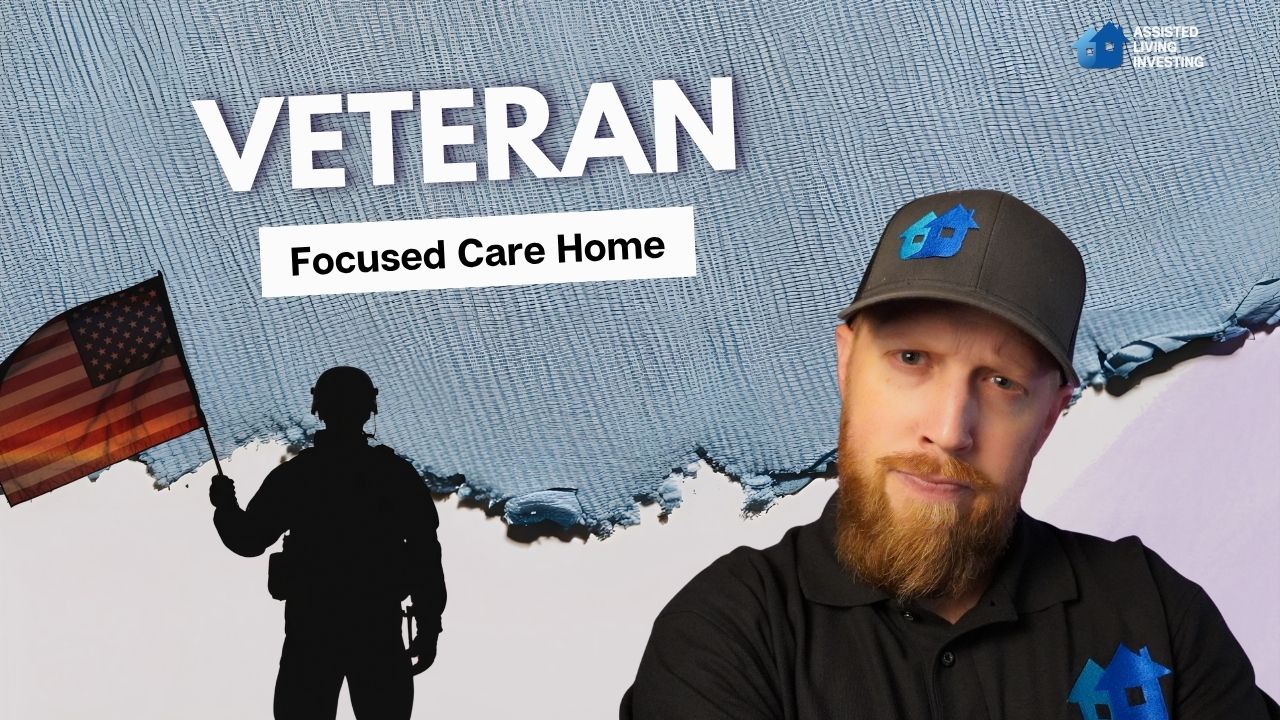
Starting a care home for veterans is incredibly rewarding—but it’s also different than running a typical assisted living facility. Veterans are a unique population with distinct needs, benefits, and expectations. If you want to create a veteran-focused care home that stands out, here’s everything you need to know.
Check out this video, too:
Why Serving Veterans Matters
Veterans bring a wealth of experience, camaraderie, and resilience, but they also face challenges like trauma, PTSD, and complex health needs. A care home that truly understands this population can make a huge difference in their lives while also standing out in your community.
1️⃣ Understand Veteran Benefits & Eligibility
Veterans don’t have a direct VA benefit that covers assisted living room and board. However, there are ways to make assisted living affordable for them:
-
Aid & Attendance (A&A) Benefit – Can be applied toward care costs.
-
VA Pension – Can supplement what residents pay.
-
Eligibility Criteria – Based on service record, income, and assets.
💡 Tip: Become the local expert. Understand the VA paperwork, explain benefits clearly, and build trust with families. This expertise will generate referrals and make your home a go-to facility for veterans.
2️⃣ Build a Veteran-Centered Culture
Veterans thrive in environments that mirror the structure, respect, and camaraderie they experienced while serving.
-
Train staff on trauma-informed care, PTSD, and military culture.
-
Use respectful language like “sir” or “ma’am” and honor ranks where appropriate.
-
Establish routines and ceremonies (like a morning flag ceremony) to create familiarity.
-
Promote dignity, purpose, and connection—veterans want more than care; they want community.
💡 Tip: Consider involving residents in mentoring new residents or helping with small responsibilities. It builds confidence and a sense of value.
3️⃣ Coordinate With the VA & Care Systems
Many veteran-focused care homes struggle because they isolate themselves. Don’t make that mistake.
-
Build relationships with the local VA, case managers, and care coordinators.
-
Use an integrated team approach: RN (part-time/full-time), social workers, therapists, and caregivers.
-
Share care notes and updates with VA primary care providers.
💡 Tip: Bridging your home with the VA opens doors to resources, reduces staff burnout, and positions you as a trusted expert in your community.
4️⃣ Support the Whole Person
Care goes beyond physical health. Veterans often have mental health needs that require attention.
-
Provide counseling and group activities (peer storytelling circles, unit camaraderie).
-
Encourage wellness: fitness, nutrition, and fall prevention programs.
-
Give residents roles or responsibilities that create a sense of purpose.
💡 Tip: Structured activities create camaraderie, mimic military unit dynamics, and support memory and mental health.
5️⃣ Transparency & Financial Clarity
Clear communication about costs builds trust:
-
Be upfront about what VA benefits cover (A&A, pensions) and what it doesn’t cover.
-
Have structured pricing for predictability and fairness.
-
Plan for care changes and rate adjustments as residents’ needs evolve.
💡 Tip: Consider supplemental funding sources like grants. While not guaranteed, they can provide extra support for your veteran-focused programs.
Next Steps
Grab the Business Plan Checklist – Make sure your care home plan is complete and actionable.
If you need help, Join the next Roadmap Challenge – Get guidance directly from Brandon on how to start your own assisted living business.
Show full transcript 👇
Transcript
00:00:06
Hey friend, I'm Brandon Gustafson. Uh, today we are going to be talking about what makes a great home, a care home, a great care home for veterans. Super excited to dive into that topic with you today. This is a question I get from people all the time. Uh, wondering, you know, I I want to serve this population. It's an incredible population. How do I do it, though? There's a lot of uh not a lot of information out there. Uh and I want to kind of clear that out for you and help you figure that out. Um my name
00:00:31
is Brandon Gustafson. I help um I help first-time assisted living entrepreneurs launch their launch profitable purpose- driven businesses in 12 months, creating prosperity, purpose, and peace in their lives. I'm super excited to dive into the topic here today with you about making great care homes for veterans uh to serve that population. So, if you're interested in learning more about that, stick around for today's video. We also um just a quick announcement had our our roadmap challenge last week. It was
00:00:59
incredible. Had so many people on there uh helping them along their path to launching their assisted living business. It was wonderful. I I I just I loved it. I would love to help you do the same thing. So, if you are interested in doing that, we have another one coming up here in a couple of weeks. Make sure you go check it out, roadmapchallenge.com. We will have links down below for you. Uh but it's just a live teaching experience uh where I'm talking with you, helping you out. Uh it's not a sales environment as me like
00:01:25
teaching you. Uh if you want to get in and ask me a bunch of questions, we have VIP sessions as well to help you out along your path to launching your assisted living business. I would love to have you on there. So go check it out roadmapchallenge.com and we will see you there on on the next challenge. Um so with that, let's get into it. Today um we're talking about um veterans and and working through this. So, number one, if you are a veteran and you're watching this, thank you so much
00:01:51
for your service, uh, for everything that you have done for our country. Um, you are, I hope, told this often by people. We appreciate everything that you do. Thank you so much. I appreciate you. I I appreciate you. Um, and thank you. Um, now, let's talk about uh what it's like uh when it comes to to care homes. This is where it it can be really really confusing because there's just so much that goes on in in this world of of care homes and uh the benefits specifically around uh what you can
00:02:23
receive um when when you're a veteran um and how that all works for you because it's it's not very straightforward um assisted living is not uh necessarily a benefit that is covered um for uh for for veterans um under VA benefits. Um it unfortunately it's not it doesn't cover the room and board piece piece of it. Um which is I think a huge misconception um that that that can get in there. However, what what it can do is the aid and assistance benefit or a VA pension that a veteran has that can be used
00:02:58
towards cost. So, um, the the VA benefits are are they're they're very similar, they're somewhat similar to what you experience with with Medicare. Um, and that they don't uh they don't view assisted living as a as a core um type of care that that that veterans need. Uh, and so the the way that the the care is provided there, it's just slightly different. Um, and it's it's reserved for more medications and uh impatient stays and and those types of things similar to what what happens when
00:03:31
you're when you're dealing with Medicare. Um, so it can be confusing and and hard to navigate that. um really your residents if if you're working on this and and you're doing uh this from for a resident population that is veterans or you want to do this for that population. Your um your residence eligibility criteria are going to be based off of their service record, their income and their assets. So, you want to make sure you are getting familiar with that. And you also are going to want to get
00:03:59
familiar with the rules and the regulations, what can and can't happen um when it comes to serving this population. Um, and that's going to going to help you out uh when you're talking with families, helping you build trust, navigating all of the paperwork because there's there's going to be a lot of paperwork uh involved in this. Uh so, you just want to get familiar with those things so you can more powerfully serve the this population that you're going to to be working with. Uh so, I
00:04:25
would encourage you to do a little bit of research, watch videos like like this one, um other ones. Um, if you're interested in learning a little bit more about kind of the specifics around that, uh, type in VA benefits down below and we can do a little bit of research on that and kind of help you out with it. If we get, uh, a bunch of comments around that, then I can make a, uh, make a video around it. Um, because it it's it's confusing for sure. Um, not only is it confusing and overwhelming for you as as an owner, uh,
00:04:52
trying to figure this out, it's also very confusing and overwhelming for the families, um, who and the individuals who are dealing with all of the red tape that's involved when they are working with the VA. Um, so if your home then becomes one of those homes that you understand these things, you know how to navigate them, you know how to explain those benefits clearly, how they work, it's going to allow you to connect with those individuals that have that. um uh it it shows uh it demonstrates to VA
00:05:24
offices in your local area that you're a VA friendly location and all of a sudden um you turn from this big confusing thing to you become the expert on um how to work with veterans in that area and then you start really getting a lot of um a lot of recommendations and referrals to come into you. Uh so this is uh we we've talked about marketing. A lot of people are concerned about how to market and how to bring residents into your facility. If you want to focus on a veteran specific population, this is one
00:05:54
of the best things you can do is get very familiar with it and become a um even if you you just become known as uh the the person that helps people understand care home benefits and assisted living benefits for veterans. That is going to snowball into a ton of um referrals and bring people into your facility. Um you can eventually train people on how to do this as well. um and and possibly create an extra stream of income for you. So, um when you do that, you you just instantly because there's
00:06:25
nobody else doing that uh really out there, um you become this trusted expert that people are going to want to work with and um and and help them just kind of understand how to navigate a lot of this. So, I hope you take advantage of that because I think there's there's a lot there. Um it's going to take a little bit of uh work on your part to get that ready to get to the point where you um you you're you're comfortable enough that you can answer people's questions um and and help them through
00:06:54
this process. But when you do that, yeah, it really is going to to open up a lot of doors for you um as as you're getting into this. So, please uh take advantage of of that situation because it's something that not a lot of people are out there doing. Um and and I think it's it's really worth um spending time to uh to figure that out and and get in there. Okay, so that's number one. If you can do that, you're going to be ahead of like almost everybody else in the game here, and that's going to to be
00:07:26
pretty incredible um as as you get into this. Okay. So, uh, next. And sorry, I'm trying to get a link copied. That's why I'm not looking right at the camera as I do this. Um, discard. Uh, my goodness. Uh, so let's talk about building a veteran centered culture. Um, and this is another one that I think is really, really important for you to be doing. So basically, um, when you're working with this population, a lot of veterans are going to be dealing with, uh, older veterans are not only going to
00:07:57
be dealing with, um, some of the the things that come with old age, um, you know, arthritis and not not being able to remember things and some of those memory loss issues, um, inability to, um, toilet and and some of those those hard things that we deal with in assisted living. Not only are they going to be dealing with that, but they're going to likely have other mental health um issues that that you're going to need to be trained in and um specialize in. So, these are uh things that have, you
00:08:26
know, PTSD, trauma, loss of identity. There's a lot of um trauma um there there's a lot of traumabased um things that are going to happen when you're working with this population. Um, so you are going to need to train your staff in how to deal with trauma. Um, specifically stuff that happens in a military culture. I'm I'm not a veteran. I'm not super familiar with with that culture. Um, so that's uh I'm speaking of this as somebody that can hopefully give you a little bit of guidance here
00:08:57
on that, but spend some time um figuring that out. I think it's going to benefit you. And then make sure your staff are also trained in that. Um, it's going to help them out as well. Make sure that you also are being respectful them to them, using language like sir, ma'am, understanding ranks and routines. The more that you can uh kind of engross yourself in in this culture, and I know a lot of you that are out there that are watching this, um you're like, um, yeah, I' I've I've been in that culture
00:09:24
already. I know how to do it. Um, what you need to do then is train your staff. um whether you have staff that are also veterans or you are training them how to build a culture that um feels um comfortable to the veterans that you are serving. That's something that I think will benefit you a lot in the long run. So respectful language uh ranks um routines uh those types of things. Um and make sure you have you're you're kind of creating a a sense of purpose and dignity and camaraderie inside of
00:09:54
your home as well. A lot of veterans are coming from a place where that's something that they probably miss um depending on where they where they've been throughout their life. Um the the camaraderie that they had in in those units that they that they were serving in um they're lacking that. And if you can create that type of an atmosphere, it's going to help out with things like memory loss. It's going to help out with um some of the trauma based um issues that they are having and it's going to
00:10:20
really help them progress. So, you want to really set your home up in a way that is going to to positively impact people when you do this. Um, veterans don't just want care. They they want more than that. They want connection as they're going through and and receiving this. So doing things like maybe you have a a morning flag ceremony or shared service stories where you can talk about that um about what happened. honoring their habits. Uh you know, like having things in a very routine um manner or uh very
00:10:50
orderly, uh those types of things that can really transform your home to feeling more clinical um which is a lot of what they experience when when they deal with VA benefits, um a lot more clinical to being something that's meaningful and makes them feel comfortable. Um so that's something I'm going to encourage you to do there as well. Um, as you're going through this as well, I would encourage you to make sure you are coordinating with the VA and other veteran um, based care systems. So, build strong relationships
00:11:21
with VA with the local VA liaison. Work with them, work with their case managers, build relationships there. That's going to bring you a lot of uh, new referrals into your home, excuse me. Uh, which is going to benefit you as a business owner, right? Um, so you want to make sure you do that. uh and and building that trust can really create the symbiotic relationship where people are coming to you. Um you're creating uh open lines of communication as well as you go through this referrals,
00:11:47
transition, medical updates. Make sure you're doing that. make sure you have the ability to take your care notes, the information that you have, and giving that to primary care providers um at at the VA and the in that health system so that you can show that you're coordinating care for for your residents and making sure that they're progressing or if they're regressing that you can demonstrate that and really help out their care. Uh I it's going to benefit you quite a bit there as well. I would
00:12:14
also encourage you to use an integrated team approach when you're doing this. So, this is going to be involving your caregivers, the people at at your place. Um, you're going to have your RN uh that doesn't need to be a full-time staff member, by the way, but you're going to have you're going to need to have a nurse at your facility in some capacity, part-time, full-time. You get to choose that. That that's up to you. Uh, and make sure you're just being in compliance with state rules and
00:12:37
regulations, but also social workers um and therapists and um just all the people that are involved in the care. I I would say you should be doing this reg regardless of if you're working with the veteran population or not, but you want to make sure that you are kind of doing a lot of care coordination. Uh it creates a much better experience for your residents. So make sure you're doing that. And this is again not just veterans specific, but we're talking about veterans today. Make sure you are
00:13:05
proactively adjusting care plans. Look at their needs. Look at the landscape of what's going on and make adjustments to to make sure that they are receiving the care that they need. Um, and recognize that all residents, especially veterans, care is going to change over time and you need to be aware of those changes when they're happening and how you can address them. Uh, when you do that and you are proactive around adjusting care plans, uh, it makes a world of difference. If you want to know a little
00:13:33
bit more about care plans, by the way, type in care plans down below. We can talk about the importance of care plans, um, why you need them, how you can adjust them. So, if that's something that is of interest to you, type in care plans down below. Now, when it comes to coordinating with the VA and other care system, a lot of veteran specific homes, um, homes, assisted living type care homes that are focused on veterans, they really struggle with this because they kind of isolate themselves. And I think this is
00:14:01
actually something that happens a lot in the world of assisted living. A lot of business owners, and if you've ever tried to reach out to other owners, you get this. They are very closed off. they don't want to share things um because they're worried that you're going to steal that. Um and the VA I think has a culture of of doing this um just with their care in general where it becomes very siloed and the type of care that happens in the VA in that health system just becomes this is what we do here in
00:14:30
our little silo and the rest of the world of healthcare is out there and they're they're doing whatever they're doing. Um, and the more that you can um create a bridge, a way to to work with your care home and the silo that is the VA, the better off you're going to be because you can really unlock um a lot of resources and credibility um and and create some consistency and care that's not going to exist anywhere else and it really sets you apart. Um, and that is also going to reduce burnout for your
00:14:57
staff because something unique about the VA is there's well the the benefit for assisted living doesn't exist and um w directly with the VA there's you know we we talked about um some of some of the financing mechanisms that exist there um but there's no specific VA benefit for assisted living but veterans have a lot of different pieces of care and the more that you can integrate with the VA and describe the type of care that you're providing and the type of care your residents need um that are veterans. It
00:15:30
opens up doors where um there are benefits out there that are under the VA that could help out with care which can reduce staff burnout um and and help help you feel like you're not having to do a lot of this alone. So, I'm not super familiar with exactly what those benefits are, but I know they do exist. And it's the same thing with working with a resident who is on Medicare. There's no Medicare specific um benefit for assisted living. Medicaid, yes, but not for Medicare. And um but there are
00:15:58
there are benefits there that are Medicare benefits that can help supplement the care and some of the costs of running a facility. And the more familiar you can get with with how those other things are going to play into what you can do as you're providing care, uh it just makes your life that much easier. Um reduces your cost, reduces staff burnout. So, you want to be getting familiar with those things so you can really uh take advantage of it and help the populations that you want to be serving. Okay.
00:16:26
The next thing I want to talk about is it it's really important for you to be supporting the whole person. And um this this again goes to all residents, but we're talking about veterans here specifically. You need to go a little bit beyond physical care. Um so that could include mental health and counseling. Um, and when you are dealing with uh a resident who is a veteran who has uh trauma- based issues and they need some extra uh conversations and and counseling and and those types of things, when you can
00:16:59
integrate that into the care in your facility, uh I really think it helps set you apart from other facilities that are out there trying to serve this population. Um do group activities as well. Uh like I was mentioning just a little bit ago, the more you can build camaraderie and create a field that is a a unit um the better off you're going to be. So peer circles, storytelling circles um create opportunities for them to build relationships and and create um some uh some connections with their
00:17:30
other residents and with the staff. And when you do that, it just creates such a better experience for for your residents, especially when you're working uh with a veteran population. Um I would also encourage you when you're working with this population to encourage overall wellness, and that could be fitness and nutrition, fall prevention programs. Um the more structure you can build into these things, I think the better off you're going to be, especially with the veteran population. So, the more that you can
00:17:56
have regiments um that you can follow and that everybody else is following, it builds some of that camaraderie, some of that fill of unit unity um that they that they had when they were serving uh that maybe they've been missing. And so, the more you can do that, uh the better off you're going to be. And if you can, so this one's a little bit tricky. Um but as I was doing some research and thinking about uh what I was going to talk about in this video, I had this idea come to me. Um, and you do have to
00:18:24
you have to be a little bit careful with this. Um, so so make sure you listen on this one. Uh, I'm going to lean in on this one because I think it's really important. If you can give your residents roles, um, where they are mentoring other residents when they come in or they're helping new residents, um, helping orient them to to what's going on and you're giving them a responsibility and, uh, they see that, okay, I'm valued. I'm a part of this community. This is not just me receiving
00:18:53
care. This isn't me just this isn't one way coming to me. This is a family and this is a unit and this is something that I get to give back to. And if you can give your residents responsibilities within reason, within regulations that exist, I think you are going to create an incredible um atmosphere for for your residents and they will speak so glowingly of you and that's going to lead to more referrals and and building out uh this incredible environment. Okay. So understand what you can and
00:19:26
can't assign to people, but where you can assigned can assign out um specific little tasks and things like that. Um I would encourage you to do it because I think it really uh adds some extra responsibility and this population I think is going to respond better to that than most other populations that you might be serving um inside of your care homes. Okay. So veterans are really going to thrive when they feel useful. Um and that's why I suggest you do that. Um so I would say some other ideas of what you could do
00:19:57
here with responsibilities um like morning check-in um maybe uh sharing experience mentoring um may maybe even like doing a little bit of mentoring with staff within reason like um these are these are the different rooms and they're talking a little bit about the level of understanding that they have about the the other residents in the in the home or or you know the little intricacies. this door knob, you have to uh turn to the left instead of turn to the right or whatever. You know, little
00:20:24
things like that. Giving them the ability to share those things and mentor and train other people, I think, is going to go a really long way with this. You're going to see some confidence and engagement sore, and that's going to create this really thriving community um and and not just be another facility. And that's what you really want to be working on as you get into this. Okay. The last thing that I want to talk to you about is um talking is just having fi transparency when it comes to
00:20:51
financials um and and how that's going to work. So, you should be upfront with veterans that you're going to serve with the families uh with the family members that you're that you're talking to in inside of uh inside of your homes that that have veterans that are in your home. Be upfront about what the VA will and will not pay for. Um, so make sure you explain to them there is no VA benefit for assisted living, but that you can use the A&A benefit, uh, which is aid and assistance, that there is
00:21:22
money there, uh, that comes through that that can help out, um, or from their from their pension as well that can go towards care costs, but the rest of that is going to likely have to come out of pocket. Um, so you need to be very transparent on what that looks like. And the more information you can get around how that is going to work in your state and for your specific situation and can then communicate that out to the resident uh themselves or their families, the better off you're going to
00:21:50
be. So, make sure you understand that. Um I would also um make sure that you are structuring your pricing around predictability and fairness. have everything. Uh you should be doing this regardless of if you're serving a veteran population or not, but make sure it is very clear um that this this is what our rates are. If rates are going to increase, this is how we will notify you when it will happen. Um this is the different tiers that exist. Um and it's based off of career needs. Um and we do
00:22:19
regular assessments. you want to be communicating a lot of this um out to them and make sure it is um it's very clear and it's it's fair um in the way that you do that. It's going to be very big for this population. Um I would say also that you want to be planning ahead because benefits can change and care needs will change. So, while today there's no VA benefit for assisted living, as we get into the silver tsunami, and as as that population is starting to age, and as assisted living
00:22:48
becomes more of a need, I personally could see this becoming something that is um more um federalized and become a benefit that exists for Medicare and for uh for veterans. Um it's not today. I've not heard any news. This is just me looking at the industry as somebody that's very ingrained in it and I could see something like that happening. And so you need to kind of think on the horizon um when that happens, how am I going to react to that and how how am I going to to adjust for it? And also
00:23:21
understand that the needs of your residents will change. And that's why we want to make sure we have very clear pricing structures in place for when care changes and more care is needed that you can very easily have a conversation with a resident or their family about why their rates are going to adjust. So you want to make sure you're clear on that. Um, and then I would also say that this is this is one of the the places where I think I think that uh grants um are are a little more um available than other areas. Grants
00:23:58
are are great. I've done 1.2 million in in grant funding myself. I have a lot of experience in the world of grants. Um they can be really hard to come by and hard to work with and and you're waiting a lot of other people and and it takes forever. Um, however, as I've done a lot of research into this, um, grants are something that you may be able to look into. Um, or partner with other nonprofit organizations that can help you get the grants. Um, that that's something that I I think you might want
00:24:26
to consider looking into. So, um, it's not a guarantee. I do not think and I do not recommend that you you base your entire funding strategy on grants because um while they are incredible um and they they have a lot of benefits to them, they're hard to get, it's not on your timeline um and it will um it will delay you significantly and I I think you should use them as more supplemental um or cool, I got an extra chunk of money from a grant. Um that's how you should treat grants. But it this is a
00:25:00
population that I think you're going to find there's there's more opportunities out there than other areas. And um I I do think that there will there's a higher probability of there being federal grants um federal money out there that um is specific to this population than than a lot of other places um going forward. I could see, especially under a Trump administration, funding for grants um going away. There's there's a lot I'm not going to get into the politics, but if you look
00:25:33
at it, um there there's a lot of things out there with Doge when Elon Musk was was doing things where they were cutting funds. And as somebody that has looked at grants and keeps a pulse on on the grant world, a lot of grants just went away overnight. We're not funding those anymore. And a lot of that I think came from um the work that that was done with Doge um and under Trump administration where there's an attempt to try to remove um costs that that are not required that um there's grant funding
00:26:05
that goes away. But I could see there being um a pretty big push. And I I do think this is something that could be bipartisan with veterans and with elderly individuals where these types of opportunities do come up. And then there's federal funds that are made available for this because it is healthcare with an aging population and a crisis that is um I would say on the horizon where there's just not enough housing out there um for for these types of residents. So, I don't have any insight into that. That's my personal
00:26:37
opinion and and uh hopefully I've kept that as um PC as possible so nobody gets mad as we live in such a a politically charged climate. Um, anyways, um, I would say, um, when you do this though, when when when you go through and you have transparency on everything that that you're talking about with your residents and and what you're going to charge them and and the structures of those things and understanding um, the ANA benefit and and all of those things, um, that that can really create um,
00:27:12
clarity. And when you have clarity and you're upfront with everything, you create trust whether it's with your resident or residents or with their families. And that trust is really going to um help catapult you into the next um phase of of just being a successful and profitable assisted living facility, a successful profitable care home. Um, when you show them exactly where their money goes and how their VA benefits are going to fit in and exactly what they're getting out of it, the more structured
00:27:40
you are there, you remove uh a lot of the fear and you create some peace of mind uh for them as they're trying to figure out how to navigate this very complex world of VA benefits and assisted living and what that's going to look like. So, you want to really be able to understand it and be able to articulate it clearly so that you can um help them understand what they're getting out of it. And that's going to that's going to allow you to be really successful here. So, it's priceless when
00:28:07
you do that. Um you you want to be able to create a home that um that they are going to love and be comfortable in and that's something you should really be striving towards. Okay. So, that was a lot of information for you there on on veterans and working with them. I'd love to hear your insights. What did you learn the most there? Um we talked we talked about um building let's see understanding the benefits and eligibility. Uh we talked about building a veteran centered culture as well. Um
00:28:36
we we were talking about coordinating with the VA health system and other care systems and types of care that that veterans receive. um why you should be supporting the whole person and creating this atmosphere that works really well for for your residents and um just having transparency in everything that you do because it builds trust and it's super important for you to do that. If you found this video helpful, make sure you like the video, subscribe and ring the bell. We do lives on Tuesdays. We
00:29:02
put out content on Thursdays as well. All geared towards helping you launch your assisted living business. I mentioned at the start of the video um my roadmap challenge. This is something that um I'm doing on a regular basis. We just got off our our last roadmap challenge last week. It was incredible. Uh it was it was so much fun. Um I loved it. We have one coming up here in a few weeks. I would love to have you there as well. If you want, there's a VIP ticket where you can come in. You get an extra
00:29:27
hour with me every single day, Monday through Friday, to ask me whatever questions. It's a group coaching sess session. Um those are invaluable. So if you have questions about the VA and veterans and what that's going to look like, go check it out. Sign up for a VIP ticket. Uh get in there. Again, it's roadmapchallenge.com. Can answer those questions, any other questions that you have as you're trying to move things forward and launch your assisted living business and and help you get started.
00:29:51
So again, roadmapchallenge.com. Go check out also the profitable assisted living facility book at thebook.com. We'll have links down below for that. That is my five pro fivephase process for helping you launch your assisted living business. I call it the focus framework. So foundation first, optimal property selection, capital and funding, understanding the rules and regulations, and having a strategic launch. And when you do those things and you follow that process, you're going to be successful
00:30:17
in launching your assisted living business. I go through that in the book. Again, it's thebook.com. Make sure you go check that out and get access to that. With that, thank you so much for being here. I appreciate it. I hope you found this video helpful. Make sure you like the video, subscribe, and ring the bell. Are you curious about assisted living, but you're just not sure how to get started? At Assisted Living Investing, I help first-time assisted living entrepreneurs launch profitable, purpose-driven businesses in
00:30:41
the next 12 months, creating prosperity, purpose, and peace in their lives. I love doing this. I love coaching people. It is one of my favorite things to do. Would love to see you on our next roadmap challenge. And remember, it doesn't take a lot, just a little bit. Just keep going step by step by step. And I promise you, if you do, and you are consistent and persistent, you're going to be successful. Thanks for watching and have a great day.
Download Your FREE Calculator
Stay connected with news and updates!
Join our mailing list to receive the latest news and updates from our team.
Don't worry, your information will not be shared.
We hate SPAM. We will never sell your information, for any reason.