How Much Does It REALLY Cost to Start an Assisted Living Facility in 2026?
Jan 14, 2026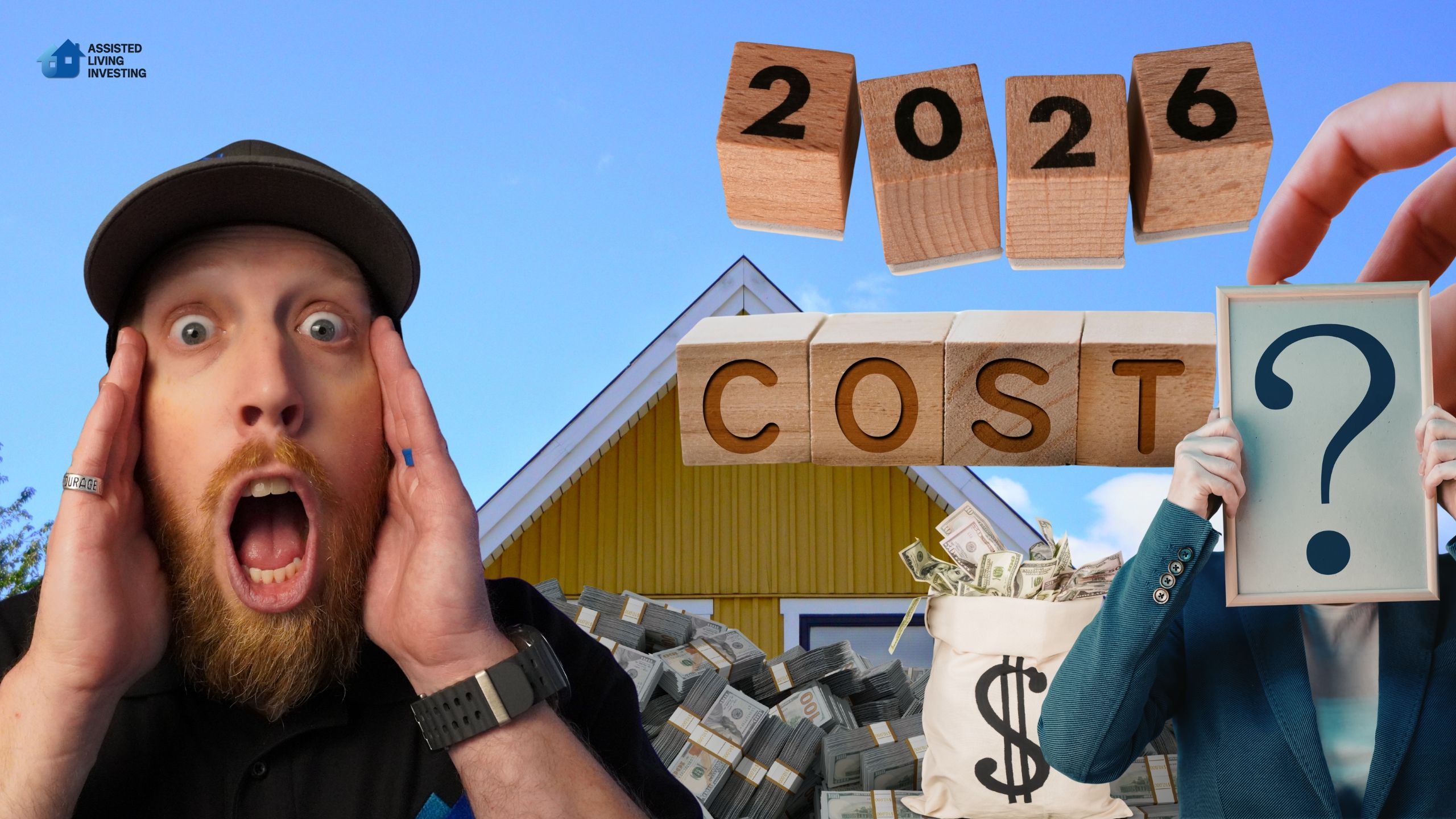
It’s a new year, and if assisted living is on your mind, you’re not alone!
I get a question all the time: “I love the idea of assisted living, but how much is this really going to cost me?”
Want the full breakdown? Watch the video below👇
Before You Talk About Cost, You Need the Right Starting Framework
Before you worry about dollars, you need a clear way to get started. I’ve seen too many people jump ahead, spend money fast, and then realize they skipped the basics. That’s why I teach a simple process called the FOCUS Framework.
The first step is building your foundation. This is where you slow down so you don’t make expensive mistakes later. You’ll want a strong business plan, clear underwriting, and market research. This is how you avoid guessing and start making smart decisions.
✅ Write a solid business plan that shows how the facility makes money
✅ Underwrite the numbers so you know it actually works
✅ Research the market before choosing a property
If you want help with this step, grab the Free Business Plan Checklist. It walks you through exactly what needs to be in your plan.
The Hidden Cost Most People Ignore Is Time
Money matters, but time matters just as much. How long it takes to open your doors can change your costs in a big way. While you’re waiting, you still have holding costs like rent, utilities, and staff planning.
There are four main ways to get into assisted living, and each one comes with a different timeline. You can rent and rehab a home, buy and convert a house, buy an existing facility, or build from the ground up. The longer it takes to open, the more cash you need to survive the wait.
💡 Buying an existing facility can shorten your timeline from months to weeks because residents and staff are already in place.
This is why I always tell people to plan for time, not just price. If you want to see how this plays out, the Profit Path tool breaks it down clearly.
The Five Biggest Expenses That Drive Your Numbers
Once you understand time, you need to understand expenses. In assisted living, five costs make up most of your monthly spending. I call these the WIFEDTM expenses.
They stand for wages, insurance, food, energy (utilities), and debt service. Together, they usually make up 80 to 90 percent of your operating costs. When you understand these five, underwriting becomes much simpler and less scary.
✅ Know your staffing and wage costs
✅ Estimate insurance and utilities accurately
✅ Plan for food and loan payments
This is also how you figure out how much operating capital you need at the start. Many lenders will fund three to six months of operating capital if you show the need clearly in your plan and ask early enough in the process.
What It Actually Costs Based on How You Get Started
Now let’s talk real numbers. The cost depends on which path you choose.
If you lease and rehab a home, you may only need operating capital and light renovations. In many cases, this can mean access to about $50,000 to $100,000. That does not mean all cash. With a small business loan, your out-of-pocket amount could be much lower.
If you buy a home and convert it, most lenders will want 20 to 30 percent down. On a $1 million home, that’s roughly $200,000 to $300,000, plus possible renovation and working capital reserves.
If you buy an existing assisted living facility, SBA loans are often the best fit. These usually require 15 to 20 percent down. On a $1 million deal, that’s about $150,000 to $200,000. The upside is you can often roll operating capital into the same loan.
If you build from the ground up, the range is wide. Expect anywhere from 10 to 30 percent down on a larger project, often $200,000 to $600,000 or more, depending on size and location.
💡 The range is big, but that means you get to choose the model that fits your risk, timeline, and resources.
Wrap Up
So how much does it really cost to start an assisted living facility in 2026? It can be anywhere from very little upfront cash to several hundred thousand dollars, depending on your strategy. The key is not guessing, but building your foundation first so the numbers make sense.
If you need help creating a business plan for your assisted living business, check out the Free Business Plan Checklist.
And if you’re ready to figure out your next step, join me for the next Roadmap Challenge where I’ll walk you through how to get started.
Show full transcript 👇
Transcript
00:00:00
Hey friend, it's a new year. You've been thinking about getting into assisted living. You're just not 100% sure how much it's going to cost you to get started. That's what we're going to be talking about in today's video. I'm Brandon Gustafson. I help first-time assisted living entrepreneurs launch profitable, purpose-driven businesses, creating prosperity, purpose, and peace in their lives. I'm super excited to have you here with me as we dive into this topic today. I help people from the
00:00:26
beginning where they don't know how to go all the way to people that own facilities and are looking to scale. So, if you are interested in working with me, go check out my 30 secondond quiz at aliquiz.com. We'll link that down below for you. And stick around till the end of the video. I've got a special offer for you to work with me directly for a full week. So, if you want to learn more about that, make sure you stick around until the end of the video. And if you need some free resources, go over to
00:00:52
assistedlinvesting.net net and I can help you out with that as well. Let's get into today's video. [music] So, let's get into our topic for today's video. How much does it actually cost to start an assisted living business? Uh here, especially as we're getting into a new year and you're gung-ho, you're ready to go. You're ready to start your assisted living journey. I'm really excited to help you out. I'm hoping this video will give you some guidance so you
00:01:22
know exactly what to expect. And if it does, make sure you give it a like so it gets out to more people as more people are trying to figure out how to do this as well. So, I've got a few things for you today that that we're going to cover. And I want to hit on these and I know these are going to be helpful for you because they were helpful for me as I was getting started. And that's something that I I strive to do here on the assisted living investing channel is make content that I know is going to
00:01:46
help you make some progress. So, the first thing that you need and before I get into pricing, I'm going to tell you a little bit of the things that you really need to be doing before you get into assisted living because that's one of the biggest problems that I hear people tell me all the time. I don't know how to get started. So, I'm going to tell you a little bit of how to get started and then if you stick around to the end of the video, I'll get into into what those pricing kind of metrics might
00:02:12
look like for you so you know what to expect and how much it's going to cost you to start your assisted living business. So, the first thing that you need as you're trying to figure things out and you're trying to get into assisted living is you need to make sure you're not making mistakes. And the best way to do that is to use a framework or a process that is proven that you know is going to work. And I I teach one. It's called the focus framework. It's my five-phase process for starting an
00:02:38
assisted living business. So the focus framework, there's five steps, right? It's an acronym. The first thing you need to do is build your foundation. This is if you don't do anything else and you're trying to get into assisted living and you're just not sure where to go, how to get started, you're concerned about funding, you're concerned about licensing, all of the things that are big hairy struggles that that are difficult for people as they're trying to figure things out. Build your
00:03:06
foundation first. The things that you're going to do in your foundation, you're going to build your business plan. Make sure you have a solid business plan. Write a million-doll business plan. That's the goal. That's how you're going to get your funding. you're going to have this really, really solid business plan. I actually have a free tool for you if you go to assistedlivinginvesting.net/bp checklist. I have a free checklist that I give to people that's going to give
00:03:27
you all the components that you need inside of your business plan to help you create a business plan that is solid. I've used this template, this checklist to secure over $5.5 million in SBA funding. So, I know it works and I know you can use it, too, to help you get to to where you want to go. Okay, so business plan, do that. Make sure you do your underwriting. Go to assisted livinginvesting.net. I've got a free underwriting calculator for you. Underwriting is understanding the numbers, making sure that it's going to
00:03:56
work. What I really don't want you to do is jump into this and just assume because you watch somebody's YouTube video that the facility, regardless of how big it is, is going to generate $10,000 a month in income. You need to do the research. And that's what underwriting is. So, make sure you go grab that free underwriting calculator. You need to build, you need to get really comfortable with the numbers and understand exactly what those numbers are going to look like. That's what's
00:04:25
going to give you confidence to move forward and give a bank confidence to fund your deal. Okay? So, you need to make sure that you have that in place. You're going to want to make sure you do market research as well. Market research is so key. is so important for you to determine, hey, is this market going to work for assisted living or not, you want to be looking at I I teach what I call the 5% rule, and that that helps you really quickly analyze a market. So, if you're interested in learning more
00:04:51
about the 5% rule, type in five down below, and I'll do a video that's specific to that to help you out and give you some guidance and and help you uh get what you need as you're trying to do market research. But, this is super important. And then the last thing that's a part of like my pyramid of creating your foundation is creating your entity. Now, what I don't want you to do is rush in and create your entity and think that you're making progress. There's so many people that I talk to
00:05:17
that do that. They spend money on Legal Zoom or they hire an attorney and they set up the entity and now you got to maintain it and they don't have a business yet. Creating an entity is very important for you to do, but it is one of those things that you actually, you know, you could even create an entity after the business is up and running and then you could transition everything into it. You should have an entity. I'm not an attorney, so uh don't take anything that I say as legal advice, but
00:05:46
I think you should have some kind of an entity because it protects you, protects your personal assets, and just provides you with liability protection, which is really important in this world of assisted living where you're just dealing with people's care. And so, you don't want to put yourself in a bad situation, but it is the least important of the four things that I've gone through here. and creating your foundation. That would be creating your entity. So, don't get caught up in fake
00:06:11
progress. Spend time working on your business plan, understanding the numbers, and doing your underwriting and in doing your market research. Those are the things that are really going to help you out as you're trying to launch your assisted living business. Okay? That's the focus framework, the the F, the foundation first, the F in the focus framework that you need to be doing. That's where you should be spending the bulk of your time right now. Okay? the rest of the focus framework. Once you've
00:06:36
built your foundation, we'll go through this a lot faster. You need to optimal property selection. This is going to be zoning and it's going to be fire department approvals and it's it's going to finding the right house and leveraging your market research that you did in your foundation phase to find the perfect property that's going to work for you for assisted living based off of the population you want to serve, the location you want to be in, how many residents you want to
00:07:00
have. All of that criteria is going to help you filter down and find the perfect property. The C is capital and funding. So, this is getting the funds. This could be working with an investment partner. This could be getting funding from the SBA. This could be looking at different programs that might be out there. This could be finding private or hard money. Uh there's so many different options that are out there for you to secure the funding that you need. It can feel overwhelming to find that funding.
00:07:29
I I'm I'm going to acknowledge that. But it's also you have a lot more options than I think you realize. And the best way for you to secure funding and find partners and get the funds that you need, get access to the capital that you need is to have created your foundation first to have your business plan, have a solid business plan, and then to understand your numbers through your underwriting. When you do those things, it makes the process for finding the capital and funding that you need that
00:07:59
much easier. So, make sure you are spending time again creating your foundation. It's going to make everything go that much more smoothly as you get into the capital and funding phase of starting your assisted living business. And then the U is understanding rules and regulations. So, the UN in the focus framework is understanding rules and regulations. This is the part where it comes to licensing. And for those of you that are already in healthcare, if you're my nurses, type in nurse down below or
00:08:26
anywhere in the healthcare industry, type in nurse because I I love seeing you guys in here and watching the channel. It's something that I I I come from a healthcare background. I'm not a practitioner, but I have worked in the healthcare industry for over a decade. I have a masters in healthcare administration. I have worked on the more clinical side of things in the past. I love the impact that we get to have in assisted living. So, you are very special people. I want to acknowledge that, you know, thank you
00:08:52
for the incredible work that you do. The licensing piece and the rules and regulations, that's something that you're, you know, sure, there's stuff, but you're, you realize that a lot of this is, it's not that scary. The capital and funding is the thing that you need the most help with. But for those of you who are my real estate investors that are out there, type in re down below for me. You, this is the part that for you is like, "Oh man, I don't know." But the licensing, that's really
00:09:17
confusing. There's a lot there. I'll tell you. So, my dad who I partnered with, he comes from the construction industry with an electrical contractor. And as we were getting into this and partnering, you know, luckily I had the experience of working in healthcare. But all the rules and regulations and things that was confusing, that was a little overwhelming for him. But now having done this for over 5 years and kind of knowing what we're getting into, and it did not take him 5 years, by the way, he
00:09:49
probably knows a little bit more about our regulations than I do at this point because that's the world that I have assigned him to do um as as kind of the CEO of our company, of our small business here and making those decisions and strategic thinking. I've put him in a role where he's more focused on finances and on regulatory things uh just based off of the the type of work that he's doing right now. And so you can learn this stuff. It feels overwhelming, but it's not going to be
00:10:18
that hard either. I promise you that. So you can do this. Okay, that's the U. Now the S in the focus framework is having a strategic launch. This is the thing that you're going to wake up one day and you're going to have closed on your facility and you're going to own it and then you'll wake up and you'll be like crap and now I got to make payroll and I've got to buy all the groceries and we got to track all the care and I need a nursing team and I need XYZ. I need so
00:10:44
many different things to run this business. And that's very true. So what I'm teaching you right here, what I'm coaching you to do is don't just stop once you own the business. This was something that for me actually I learned the hard way that once you get those things done, you're going to own a business. So you need to have a process in place that's going to allow you to strategically launch your business. And from that point of view, that means you're going to have EHR vendors and
00:11:13
you're going to have meal planning and you're going to have your administrator in place and hiring all the staff and running payroll and all of those things that come into play here. That's something I teach you how to do, by the way, in my coaching programs. But you need to have a a process, a strategic way to launch your assisted living business so you can not only own a business, but run a business profitably. And that's obviously going to be your goal. You want to create time and
00:11:40
financial freedom for yourself. Like I hear you. That's the thing that you are most concerned with and why you want to get into assisted living. And that's what having a strategic launch is all about. So that's the focus framework. You need to kind of have this framework. need to have this process in place so that you can do this successfully and generate income and not feel like everything is falling apart around you. Um, and it's what's going to help you make real progress towards launching
00:12:07
your assisted living business going from man I don't know, you know, all the way over here, I don't know how to get started. I don't know what to do to the concerns about funding to the concerns about licensing to all of a sudden over here now you've got this profitable business and you're running that business in the way that you want to and you're having the impact that you want to have in the world and in your community which is great. So, as you're going through this now, you have the
00:12:34
focus framework. I also want to share with you some of the hidden costs of time as you are working to get into this because there's real costs and we're going to talk about that here in just a second for how much it's going to cost you to launch an assisted living business. There's real costs upfront money that you've got to do that you've got to pay to, you know, down payments and and things like that, money for running your business. All of those things, those are real. We're going to
00:12:59
talk about that here in a second. But there's also some hidden costs and those hidden costs come with the amount of time it's going to take you to launch your assisted living business. So the the things that that you need to understand, this is why I tell you you need to have a framework. This is why you need to build your foundation first because when you do those things, it makes everything that much more simple for you. So I have a tool now depending on which option you want to go to.
00:13:26
There's really four options that you can look at when you're getting into assisted living. You can rent and rehab the house. You can buy and convert a home and and turn it into assisted living. You can buy an existing business. Or you can build something from the ground up. Those are kind of your four options. Now, depending on which option you go with, you're going to have longer lead times before you can go from I want to get into assisted living to my doors are open. Okay? So that lead time that that period of time
00:13:57
that down period those are where you're going to have your holding costs. Now I have a tool for you that can help you understand a little bit of this. If you go to assistedlivinginvesting.net/profitpath, you're going to find that tool and we'll link it down below for you as well. But the profit path tool is going to show you how much more quickly you could generate income if you were to buy an existing facility versus buying a home and converting it into assisted living solely based off of the the holding
00:14:30
period. What buying an existing facility is going to allow you to do is jump in and you already have residents, you already have staff. So all the learning curve that comes from that and the time that takes to ramp things up, you reduce your curve significantly from what could be 3 to 6 to 12 months, like really long-term period down to just a couple of weeks. Um, and so that's something that I want you to take into consideration that you can actually bend time here, which is really cool as you're getting into this.
00:15:03
And the profit path tool, assisted livinginvesting.net/profit /profit path is going to help you understand how you can bend that and what that's going to look like. Now, it doesn't mean that you should absolutely buy an existing facility. I think it's the best way to get into assisted living. But just because I think it's the best way doesn't mean it's the best way for you. You may already own a home and you want to convert it into assisted living. Or maybe you don't have the upfront capital
00:15:28
to buy a home and you're not comfortable partnering with anybody. So, leasing is the way that you need to get into this. Or maybe you have millions of dollars just sitting around. If you do, reach out. Let's chat. And if that's the case and you want to buy an existing facil or build an ex build a brand new facility, right? And if that's the case, then you're probably a little bit more you're okay with the risk and and the time that it's going to take to get that building
00:15:53
up and running and and perfect because you see the full potential for for the profitability to come through. So, choose the model that you want to go into and then understand the timeline that it could take. But those are some hidden costs that I really want you to be aware of. And the other thing as you're going through that and and trying to figure out how how to make this all work, you need to spend some time understanding what I call the wife expenses. These are the five biggest expenses when it comes to assisted
00:16:23
living. So, if you're interested, type in wife wed. I'll do a separate video specific to that. But the wife expenses, your five big expenses are going to they're going to be 80 to 90% of all of your operating expenses in your business. They stand for wages, insurance, food, energy, which is your utilities, and your debt service. So like your house payment, your mortgage payment, any loans that you have, that's going to be your debt service. That's your big five expenses. They're 80 to
00:16:49
90% of all of the the money that you need to have to operate your business. Doesn't mean that 80 to 90% of your revenue necessarily is going to those. It's just of the operating expenses. Those are 80 to 90% of it. Okay? So, if you understand those, you're going to actually be able to underwrite really easily and you're going to be able to get what I call your operating capital, which if you're going through this, you can often times ask a lender to give you some extra money for your operating
00:17:18
capital. You just need to have that built into your business plan demonstrated in your underwriting. Why are you asking me for an extra 3 to 6 months worth of money? and you need to demonstrate the need for it and that it's going to help you run a successful business as as you get things started. Okay? So, you need to have those things. That's going to give you a lot more breathing room as you get started and know exactly how much money you should be asking for when you go to a lender and say, "I need money for assisted
00:17:48
living." So, all of this, right, we've built a foundation. We've started understanding the the numbers. We we know what our pathway to profitability is and how to find that. We understand our expenses. These are the things that you need to be doing before you can start asking your question. How much does it really cost to get into assisted living? So, let's talk about that. Okay? That's why you're here. That's why you're on the video. If you're still here with me, I hope you learned
00:18:11
something. If you did, like the video because I want to run through this for you so you understand at a high level how much it's probably going to cost you to get into assisted living. Now, I've talked about there's four different methods, right? There's leasing and rehabbing a home, rent and rehab. You can buy an existing home and convert it into assisted living. You can buy an existing business and just jump in and and boom, you got a business or you can build something from the ground up.
00:18:38
There's kind of ranges for each of those options. So, when it comes to leasing, honestly, the the thing that you need to be looking at there, you're probably not putting a lot of money down. Maybe you need to put in some money for the rehab of the home and turning it into assisted living. Maybe you need to do that. Maybe you can negotiate it with the landlord. Maybe they're willing to do that. I've actually worked with one of my students in my success system program. And that's
00:19:05
something that they did. They were able to negotiate a lot of those renovations with their landlord. The landlord took care of it and they were able to get in and and turn turn a home that was already actually very welllaid out for assisted living. it was for 12 residents and turned that into an assisted living facility that's now in operation and has been for a couple of years which is super rewarding to see right as a coach. This is what I want to see is is people being able to do that. Uh but they went
00:19:33
through that process and what I would suggest in a person like their situation is you want to have that 3 to six month cushion. So spend some time figuring out your numbers. Figure out how much money you're going to need on a monthly basis. multiply that by however much money, however many months you you want to have this cushion for, and that's what you're going to be making sure that you have access to as as capital that you are putting in. Or maybe you are going to go and find a a small business like an SBA
00:20:02
Express loan or just a a separate small business loan at your local bank or credit union. And that's the amount that you want there. So, I could I would say you're probably looking at anywhere between $50 and $100,000 is what you'd want to have available in in those funds to you. And again, that doesn't mean that you have to have $50,000 in the bank. For those of you who are trying to do this on on a budget, it means that you would need to go to a lender and you would need to say, "I need x amount of
00:20:32
money. Here's my business plan. Here's my underwriting. This is how much I know I need and I need uh $100,000." and they'll tell you, "Okay, cool. If you want a h 100,000, we can approve that for you with this small business loan, not necessarily SBA, by the way." Um, and it's going to be 20% down. So, you need $100,000. You're going to give them $20,000. So, it shrinks your amount that you need to get started from 50 to 100,000 all the way down to 20,000, right? You're going to have to put some
00:21:01
kind of a down payment up, but that can really get you in there. So, you can be in as low as that much as you get into this. I'm not saying that every single person can do this. I'm just saying I know it can be done. Okay, so that's option one. When it comes to leasing a facility, leasing a home and rehabbing it to get it ready for assisted living. You could probably actually do this for less. If you have a lot of confidence and you feel like and you want to take the risk of not having your beds filled,
00:21:29
I I think it's better to have a cushion. I I strongly encourage you to do that. It's going to save you. is going to allow you to sleep at night, which is really important. But I mean, technically, you could do this for less and put yourself in a rough situation and lose sleep and and and gain some stress. I don't want you to do that, but it's possible, right? The next is buying an a home and renovating that home. So, when it comes to this, you're probably looking, because these are viewed as
00:21:55
investment properties, at a down payment between 20 and 30%. So, let's say you've got a home that's let's just try to keep this really basic math for me. We're going to buy a million-doll home. Okay? So, if I'm looking at 20 to 30% down on that home, I'm probably looking at 200 to 300,000. Okay? That that's what I could be looking at from that standpoint. That's how much I'm probably going to need. Now, whether I need to have that personally or I'm going to
00:22:22
partner with somebody, uh you know, whatever that situation is going to look like, take that into consideration for you and your situation. but 20 to 30% down when you're buying an existing home and converting it into assisted living. That's not also just strictly getting the home, right? Not taking into consideration any renovations you might need to do or extra operating capital. Those would be extra money that you might need to get. Now, could you build that into the loan that you're getting?
00:22:50
Possibly. Those are conversations to have with a lender. So, you might be needing to add an extra $50,000. Maybe you need to have a separate loan like we were talking about with the lease and with the rent and rehab situation where you have a small business loan that is specific to your operating capital. Maybe you need to do something like that. And so that could add an additional, you know, $20,000 in your down payment. So that's the the route of buying a home and converting it into assisted living. Now, if you're going to
00:23:18
buy an existing facility, SBA is the route I would suggest that you go. When you buy an existing home and convert it, SBA can be really hard to do because there's no business attached to it. And so, they're not going to be quite as excited. So, you're going to probably have to go a more traditional route of conventional financing. But, when you buy an existing business that has historical financials and already has residents and already has staff, SBA is going to be a great option for you.
00:23:44
There's two loans that you can look at there, the 7A or the 504. Um, if you want more information on either one of those, type in 7A or type in 504 down below. We'll do a separate video for that. Now, when it comes to working through the SBA, you're probably going to be looking at anywhere from a 10 to 20%. I'll tell you as low as 10. Realistically, you're probably looking at more 15 to 20% down. So, again, easy math. We've got a million-doll property that we're going to look at. 15 to 20%
00:24:14
down is 150 to 200,000. The nice thing about getting into an SBA loan is if from the beginning you have built your foundation, you have your underwriting, you have your business plan, and you have written into that business plan that I need an extra 60, 80, $100,000, whatever the amount is in operating capital, if you're able to put that in early on in the process, don't wait, but early on in the process, as you go further along the path of getting your funding, the chances of them saying, "Yes, we can give that to you
00:24:48
increase exponentially. I've actually done this with my facilities and have helped people do it in my success system coaching program. That's something that you know is it can benefit you quite a bit and allows you to take that out. And the the cool thing is you're just going to add it in. You don't have to have a separate loan. So let's say we're doing a million-doll property. We want an extra $60,000 in income or operating capital there. So, we're doing 15 to 20% off of
00:25:15
$1,60,000. I'm not going to do the math there, but you can you can you can look at it, but you're looking at probably somewhere between 150 and $200,000 down. This is the way I did it. I partnered with my dad. He had the the money. He had the funds through a heliloc, a home equity line of credit. We use that as the down payment. That's how we got into our businesses. So, that's a route that you can go as well. Okay. And the fourth option that you have is to build something from the ground up. This is
00:25:44
going to involve finding the land and getting all the the approvals with an architect and an engineer and getting everything updated and everything that it's a lot longer timeline to get started. But when it comes to the amount of money that you need as you're getting into this, you're looking at something that is probably 10 to 30% down. Okay? Uh can it can vary significantly from lender to lender. I've even seen some that are lower than 10%. So take that all into consideration. The thing is
00:26:15
when you're building an existing business, you're probably going to be spending more. So let's say that this is a $2 million building. Okay? So 10% of 2 million is 200,000 and 30% of 200 million is 600,000. So that can kind of give you an idea of what that's going to look like. The other thing with with construction loans is you're probably going to have this for 12 to 24 months as you're building the business, building the building, and then once you're done with that, you can generally
00:26:43
transition that into more of a conventional loan. So, that's something that can help you out there. You can just kind of refinance it and get it into that spot. So, that's a lot, right? We went through a ton of stuff here in this video. We went through why you need a framework to help you get started. Understanding the expenses and the hidden cost of time when it comes to getting your business up and running. And then we got into your the amount of money it's going to cost you to launch your assisted living
00:27:10
business. And I would say you could be anywhere from like $0 if if you want to really do this on the sho string up to $600,000 million plus. There's a lot of different options that are out there. So the range is is big. A lot of this is going to be you making decisions about what you want, you know, the type of home, building your foundation, understanding your finances, and that can be a lot. And in my roadmap challenge, I told this told you at the start of the video, I have an offer for you to work with me for a full week
00:27:40
inside of my roadmap challenge. It is a week-long coaching challenge to help you launch your assisted living business. You can go check it out at roadmapchallenge.com. get more information there about the next challenge we have that's coming up. It's going to come up soon. And I do these multiple times a year. But this isn't like a bunch of courses that I give you. This is or an upsell or anything like that. It is me working with you to build a road map so that you know which type of facility you should
00:28:06
be going through the basics of building your foundation and underwriting basics and understanding how funding works and understanding how licensing works and building a vision. We go through all of those things inside of the Roadmap Challenge. It's super fun. It's great to be working with people and helping them get to the point where they're launching their assisted living business. So, go check it out. roadmapchallenge.com. I would love to see you there. If you like this video, if you found it helpful at
00:28:32
all, make sure you like the video, subscribe, and ring the bell as well so you get notified every time we put out content like this. We go live on Tuesdays, put out content on Thursdays. Share this with somebody who's trying to figure out how to get into assisted living so that they can learn from this as well. Are you curious about assisted living, but you're not sure how to get started? At Assisted Living Investing, I help first-time assisted living entrepreneurs launch profitable, purpose-driven businesses, creating
00:28:55
prosperity, purpose, and peace in their lives. I help people from I don't know how to get started all the way to those that already own facilities and want to scale. If you need some help and trying to figure out where you're at in that process and how I can help you, make sure you go take my quiz. It's 30 seconds aliquiz.com. Go check it out. Would love to see how I can help you out. And with that, remember it doesn't take a lot, just a little bit. Just keep going step by step by step. And I
00:29:19
promise you, if you do, and you are consistent and persistent, you're going to be successful. Thanks for watching and have a great day. >> [music]
Download Your FREE Calculator
Stay connected with news and updates!
Join our mailing list to receive the latest news and updates from our team.
Don't worry, your information will not be shared.
We hate SPAM. We will never sell your information, for any reason.