Discover How the One Big Beautiful Bill Will Transform Assisted Living
Aug 15, 2025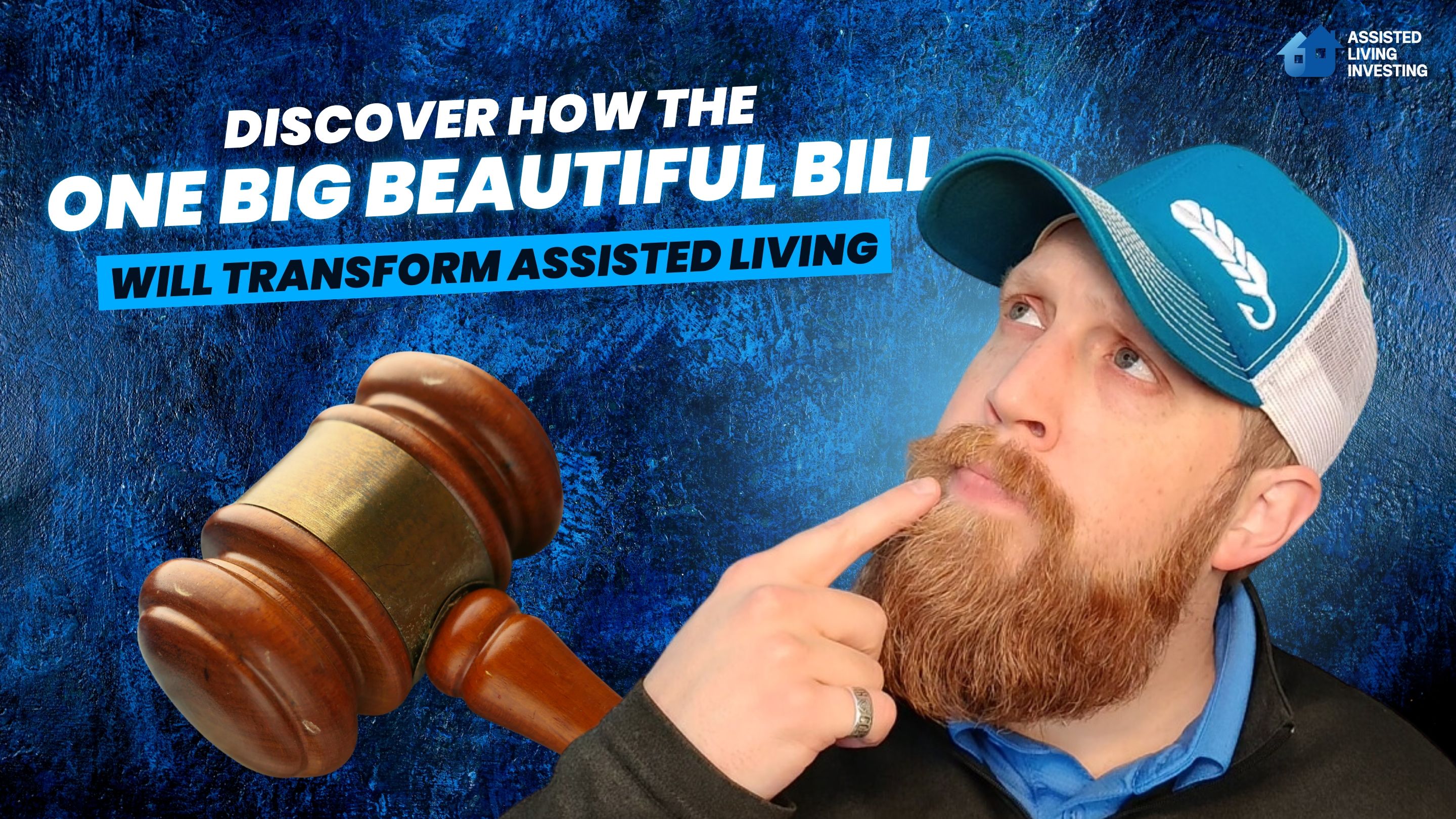
The assisted living industry is standing at the edge of a transformative shift — thanks to what’s being dubbed the “One Big Beautiful Bill.” This major legislation aims to reshape funding, access, and business opportunities for residential assisted living across the U.S.
Let’s break down how this change could benefit your assisted living business.
Check out this video, too:
💰 Medicaid Expansion & Equity Cap Increase
One of the bill’s biggest changes is an increased Medicaid equity cap — raised to $1 million. That means elderly homeowners can now retain more equity in their homes and still qualify for Medicaid. For assisted living operators, this opens the door to more potential residents who were previously locked out due to asset limitations.
What this means for you:
🏡 More seniors can afford assisted living without liquidating their homes.
📈 Higher eligibility = more residents = stronger revenue potential.
🏥 Rise of HCBS Waivers: Aging in Place Encouraged
The bill emphasizes Home and Community-Based Services (HCBS) waivers, aiming to keep seniors out of institutional settings like nursing homes. This directly benefits residential assisted living facilities — environments that provide care in a more homelike setting.
Why it matters:
✅ HCBS expansion increases demand for small, personalized care homes.
💡 Facilities offering home-style care will align with government incentives.
💼 1031 Exchange Stays: Boosting Investment Strategy
The feared removal of 1031 exchanges — a tax-deferred real estate investment tool — has been avoided. This is great news for real estate investors looking to reinvest gains into assisted living properties.
Investor perks:
💸 Avoid capital gains taxes when rolling profits into new properties.
📊 Continue to build assisted living portfolios strategically.
🛠️ Eased Staffing Requirements
The bill also addresses staffing flexibility, especially around mandated ratios and hiring constraints. This eases the pressure many small operators face in hiring and labor costs.
Takeaways:
🧑⚕️ More control over staffing decisions.
💼 Better management of operational expenses.
🧭 State-by-State Medicaid Control: What to Watch
With caps and budgets now tighter at the federal level, states will need to make more Medicaid-related decisions. Each state will determine:
-
Who qualifies
-
How much funding is allocated
-
Whether to tighten or loosen eligibility
Your action plan:
📍 Stay updated on your state’s Medicaid policy changes.
🧾 Consult tax and legal professionals to prepare your business accordingly.
🚀 Growth Incentives & Opportunity Zones
The bill offers expanded Opportunity Zones — regions that offer tax incentives for business investments. This could encourage the development of new facilities or the upgrade of existing ones in qualifying areas.
Growth opportunities:
🏗️ Start or expand your facility in tax-advantaged zones.
💵 Access more funding with less tax burden.
🧠 Final Thoughts: Prepare Now, Benefit Later
Although the full effects of this bill may take up to a year to implement, savvy entrepreneurs are planning now. Whether you’re launching or scaling your assisted living business, this bill offers multiple angles of opportunity.
📝 Key takeaways:
-
Track how your state responds to Medicaid changes.
-
Use 1031 exchanges to grow your real estate holdings.
-
Watch for increased demand from more Medicaid-eligible seniors.
-
Leverage staffing flexibility to control costs.
-
Consider Opportunity Zones for future developments.
💡 Pro Tip: Talk to legal and tax experts about how this bill will impact your finances and business strategy.
Next Steps: Take Action Today!
🚀 Want to launch your assisted living business in the next 12 months?
✅ Step 1: Download the Business Plan Checklist to start planning.
✅ Step 2: Need help figuring out where to start? Join the next Roadmap Challenge and build your launch plan with me.
✅ Step 3: Follow this guide, take action, and bring your vision to life!
Got questions? Drop them in the comments below! ⬇️
Show full transcript 👇
Transcript
00:00:07
Hey friend, I'm Brandon Gustafson. I help beginners like you launch their assisted living business in the next 12 months. Super excited to have you here with me on the channel today. We're going to be talking today about uh discovering how the one big beautiful bill will transform assisted living. This is for those of you that are that are kind of watching this kind of current events. Um the big beautiful bill, which is what I'm going to refer to it as um rather than the whole thing, um uh was passed
00:00:34
just this last week. And there's been a lot of questions on how this is going to impact assisted living. And so I really wanted to get into that with you today. uh explain what that looks like, how it's going to impact uh the way that you're investing, uh the way that you're operating uh an assisted living business because there are a few things in the bill that I think will have an impact um on this. Um so, if you're interested in that, uh make sure you stick around for today's video. Like it, subscribe, ring
00:01:01
the bell uh so you get notified every time we put out content like this. Uh I put out content on a regular basis here on the channel and excited to share a lot of uh what I am am learning about these types of things uh with you as you're trying to uh launch your assisted living business as well. So um and make sure you are um doing all those things and uh also I have a free resource for you. Make sure you go and grab your free business plan checklist at assistedlivinginvesting.net/bp checklist. If you go uh I have it down
00:01:31
here in the corner for you um throughout the entire video. Uh so just go and uh type that in. Uh go grab that free resource and uh let it help you start making some progress towards launching your assisted living business as you are trying to uh you know trying to make some some good progress here and um and and be successful as as you're launching your your business. Um I am trying to get the link over to the Facebook group. I've been having issues with it posting over there. So, um, Facebook adjusted
00:02:04
things recently and I like it just doesn't seem to be working. So, I'm trying to stay on top of it. It's just a little bit hard. Um, so for those of you that are having issues with it, I apologize. We're trying to trying to make it through. Uh, we'll also have some time for questions. So, if you have questions as you're as we're going through this, make sure you type those down below. We'll have a little bit of time here for Q&A at the end. So, with that, uh, let me shift over here, share
00:02:28
my screen, uh, as I do, and, uh, let's talk about it. uh how does the one big beautiful bill the beautiful the the big beautiful bill transform uh assisted living? How's it going to impact you as you are trying to do that? For those of you who are new here, um type in newbie down below. Love seeing when uh new people have joined the channel and and are finding things that are helpful. Um but my name is Brandon Gustafson. I have owned and off operated assisted living facilities since 2020. I've secured over
00:02:56
$1.5 million in SBA funding. So, I've I've done this. I I know how to to get things started. I operate out of state. I operate in in Idaho. Um, I've operated in Colorado in the past. I live in Utah, so I've done this out of state and and know how to how to kind of handle all of that. Also have a master's degree in healthcare administration. So, I've worked in the healthcare industry since 2011. um have a lot of experience just working in the industry as a whole, understanding how regulations work, how
00:03:24
to run healthcare businesses and love sharing my knowledge uh with people just like you. So let's talk about it. What is the one big beautiful bill act? Uh could you may see it as the OBBBA, the big beautiful act, the beautiful act like the big beautiful bill or there's so many ways for it. Ultimately the purpose of this this is under the Trump administration. I'm going to try to not get political. Um I'm taking this information from online resources that are specific to like congress.gov and
00:03:54
and things like that. This is the purpose of of what they are um hoping the bill will do. So I'm I'm stating the purposes. I I don't want to get um too political. I just want to state this is what it is. Um but the purpose of the bill as it has been written and as is intended is to boost the economy, aid small businesses, and there's also a a a piece of it that is reforming Medicaid. there's a whole lot more to to the bill. Um it is called the big beautiful bill because it is big. Um and and there's a
00:04:23
lot that goes into it. Uh so there from a perspective of assisted living, how it's going to impact you. Um those are kind of the purposes there that you're going to see. Uh there are some key provisions in here, tax cuts, uh some real estate incentives, which are actually going to be really beneficial uh for for you as you're trying to get into this if you're going to be purchasing real estate. Um and there are some Medicaid changes that you need to be aware of as as you get into this as
00:04:52
well. Um and from a legislative timeline, this was passed in 2025, just um in early July of 2025. So if you're watching this, you know, years in the future, um was passed in July 2025. um it will mostly start to be put into effect in 2026. Um starting in 2026, there's going to be some stuff that comes in earlier, some stuff that comes in later. Generally, a lot of this will go into effect in early 2026 as um existing rules phase out. Um a lot of those rules that are were going to get phased out were actually under the the
00:05:27
previous Trump administration. And so they are kind of just extending a lot of this. Plus, there's a lot more that goes into it. That's kind of the the overview here of of what the the big beautiful bill is. Now, let's talk about the impact that this is going to have on real estate. So, I'm I'm talking about this from a few different angles. Um, one is real estate and small business, how it's going to impact you there. I want to talk about Medicaid. I for those of you that have not watched me before,
00:05:52
I talk about Medicaid a lot. I run facilities that are largely based off of Medicaid. So, this has a lot of impact on me. um as I want to share that uh what I'm seeing from it so you can see what that looks like. So, we're going to talk about Medicaid and we're also going to talk about this just as an overall uh thing for like assisted living uh the industry as a whole. Uh what I'm seeing the good and the bad there. So, that's what I really want to get into and I feel like I got to sneeze. So, um
00:06:18
hopefully I don't do that. Let's see. Uh impact on real estate and small business. So, one thing on here is there is a a tax benefit. Um there's a 23% deduction for pass through entities. That was previously 20%. So basically what that means is you can deduct a little bit more from your taxes um as a pass through. This is a benefit for uh for small businesses. So that's that's a good thing. You're going to be paying about 3% uh I don't know how exactly the the math works out, but 3% less in taxes
00:06:50
um in general. That's that's how it's going to work. So, there's there's a benefit there for you as a small business owner, which is part of the reasons why people get into small business, why they own businesses, is because of the the the pass through uh deductions on their taxes helps out a lot. And and this and the big beautiful bill is going to to improve that a little bit. Um investment perks. Now, if you are if you're a real estate uh investor and you're looking at this,
00:07:16
there is more um opportunities to invest in opportunity zones. um expanded uh like those opportunity zones have been expanded. Um there's more uh loans incentivization for loans. So lenders are going to be a little bit more um willing to invest um with you or or work with you on this when you have a good deal. Uh so those are those are also really good things. This does not mean um I I want to make sure that this is very clear does not mean that cool like lenders are are free. they're they're
00:07:48
going to lend on every single thing. They're still going to have very strict guidelines. We still live in an economy that is a little bit unstable. Um and as much as you know I I think it is improving, it's it's still unstable. So there's still a lot of uncertainty. Um so a lot to be to a lot remains to be seen on what that's going to look like. So lenders aren't giving blanket yeses and they're not saying yes automatically, but the intent of the bill as it is written is to make it
00:08:16
easier for lenders to say yes because of of the options that are out there for this. Um, opportunity zones are actually really interesting and something I've not looked at for me personally in doing this with assisted living, but I think it opens up a lot of doors and something that I think people should be looking at a little bit more. So, if you're interested in learning more about opportunity zones and how it can kind of cross um with assisted living, type in opportunity zone down below. It's
00:08:42
something I I'm happy to look into and do a video on. So, type in opportunity zone if you are interested in learning more about that. There's also some regulatory relief that I think uh is actually really beneficial as a small business owner with this. So, there was a staffing rule that uh was going to go into effect. I think it was in 2026. Um, and it was going to require increased staffing in nursing homes. Now, assisted living is not a nursing home, but if there is an increased staffing
00:09:15
requirement in nursing homes, that will trickle down into assisted living eventually. So, the the staffing rule uh the the increase in staffing for nursing homes was pushed out. Um, it was paused until 2034. So, it gives us about eight years um to to worry to to not have to worry about that, which means that it probably pauses it for assisted living for about 10 years. Like I would say that assisted living would probably follow. Um it's it's kind of in the same industry. It's something that would
00:09:46
would come in and so it's going to push that out for about 10 years. Uh helping reduce costs for those that are holding these um these options for a longer period of time. So, that's that's a really good thing, having some of that regulatory relief, not having to pay staffing because also wages are going to continue to go up. Uh, it's something that that that I've seen in the 5 years that I've owned these businesses since 2020. It's not going to stop. And, uh, so being able to to not have to pay more
00:10:16
staff and pay more money is going to help um help you have a little bit more control over your expenses, which is huge. And staffing is your biggest expense by far. it's going to be 50 to 80% of your expenses are going to staffing. Okay? So, it's something that you really want to to be honing in on there. So, regulatory relief, big one um for for small businesses and helping you control your cost and making sure this is going to continue to be profitable for you. Now, let's talk about Medicaid.
00:10:43
So, Medicaid is is something I've I've chatted with this a little bit. Um and we've got a question here, Riri. Uh what are the Medicaid changes? So, um there's been a lot of talk about Medicaid and how that's going to impact things um just overall Medicaid reform and what that looks like. Now, my understanding of the Medicaid changes here uh is the the Medicaid changes are a lot more um geared towards uh qualifying for Medicaid. So, uh, what that means is it it it there's a higher standard for
00:11:18
qualifying for Medicaid, but more than that, staying on Medicaid. And and this does not impact very much the the younger um population. So, children doesn't really impact their ability to qualify for Medicaid, nor does it um impact very much the elderly uh the population you're working with in assisted living. And we're going to talk about that here in just a second. It does impact um people like me. So, if I were trying to qualify for Medicaid, the requirements are now a little bit more
00:11:45
strict for me to qualify and stay on Medicaid, I would have to show more consistently that I'm looking for a job and that I have at least a part-time job, like I'm doing the things that I need to do so that I can get off of Medicaid. So, it's not uh a a per a perpetual welfare program is is is kind of the intent with with the bill based off of my understanding of it. Now, how that's going to impact assisted living is um it will, I think, have some impact on Medicaid facilities, facilities like
00:12:18
mine. Um there are some regulatory shifts here with Medicaid. Uh state Medicaid rules are going to potentially tighten. Uh they're going to tighten up a little bit, but that is going to be handled on a statebystate basis. So, as I was looking through this and and and doing some analysis and and using AI, frankly, to to help me interpret this because I don't have the time to read through the entire bill. Um, what I found is, um, the the the funding, uh, so Medicaid, u, quick lesson on on how
00:12:52
Medicaid works, um, and differentiating it from Medicare. Medicare is a federal program. It's paid for with federal dollars and run at a federal level. um Medicare. Your residents in in assisted living may be on Medicare, but you as an assisted living facility will never receive payment from Medicare. Nursing home, yes. Assisted living, no. Medicaid, on the other hand, you can you can be a Medicaid facility or could be HCBSA uh HCBS waiver. Uh could be called something different in your state. Um
00:13:26
Medicaid is federally funded, but it's administered at a state level. So, what has changed in this bill is the the funding cap for what is available at a federal level to go down to a state has been um not reduced. It's just been capped. I think it back what it was um precoid. Um so, I think it's like it goes back to 2017 rules or 2019 um funding um mechanism. So, it's not it's not really reducing it. Um it's just taking it back. I guess like there's a little bit of a reduction, but overall
00:13:59
it's it's not like cutting it in half. It's just going back to what it was previously um prior to co. Uh so uh that that money that cap is is a little more hardcaped. And so states need to be a little bit more um uh diligent or uh prudent with their funds. Uh so they need to look at it and say, "Okay, who's going to get this money?" And this is going to be on a state-by-state basis. Who's going to get this money? How much are they going to get? um do we need to tighten up our rules for how they're
00:14:29
going to qualify or do we not want to change that? And if not, how are we going to um supplement the funds um that are coming from the federal government down to the state level? And for if if there's this gap right here, I don't know if you can see my hands or but there's this gap that that's this big from where it where it was today versus what it's going to be in 2026. How are we going to to cover that gap? Are we going to reduce the amount of coverage that we're providing to uh to certain
00:14:59
people to all people? What's what's that look like? Are we going to supplement it and bring it up through taxes that we're going to raise through the state? Um so so there there's a lot of um state um it's going to be up to the states basically on on how they're going to to fit into that gap. So that's that's where it can adjust. Um now what what I don't see happening is as I mentioned I don't see it impacting younger generation. I don't see it packing
00:15:30
impacting the elderly. I think it impacts people that are you know my age mid20s to to mid50s um that age group that are that are on Medicaid and have been for a long time. They're also going to be looking at people that have passed away that are still receiving Medicaid payments um for whatever reason. So that will uh reduce that a little bit. Now, on top of that, this is why I really don't see it impacting assisted living. There is an increase in HCBS waiverss, and I think that's going to shift the
00:16:02
demand. It's going to allow more potential residents to receive care. There's actually a few things that have happened here. I'll go get on to that on the next slide on how that's going to work, but it makes it actually easier for an elderly individual to qualify for Medicaid. So, this is where I really don't see it having a negative impact on the industry. If anything, I I think the the changes they've implemented here, and I think it's under it's like under I can't remember what they call it, but
00:16:29
it's rule 304 or item 304, I think it's 304, it might be 301, but it's uh in the 300s. Um so, if you want to go look at it, you can see what that looks like. Uh but, uh they're going to increase HCBS waiverss, Medicaid. Um that's going to shift demand. uh it could shift demand by allowing the potential residents to receive care at home or homelike settings. This is where I think it can really benefit residential assisted living facilities. This is u basically what it's saying is we don't want to put
00:17:01
people in nursing homes. We're not going to incentivize going into nursing homes. We're not going to incentivize long-term care in those settings. We want people to age in place. basically uh we want them to age in places like their home and bring in home health care. Um or we want to put them in a spot like an assisted living facility or an independent living facility where um there's kind of this more homelike of a of a fill. Um that's that's what there's a lot of incentive for as I was reading
00:17:31
the bill. This is why I think it actually benefits residential assisted living. um big box assisted living not maybe not so much but I think there it will it will still benefit higher levels of care though that's where I don't know that it's going to help out uh quite as much so they want to um they really want to focus on better more home centered type of care uh is is the goal uh from what I could see in there now let's talk about the impact on assisted living and this is uh going back to again to to
00:18:02
Medicaid um the ability for an elderly individual to qualify for Medicaid has actually become a little bit easier. So, there is what's called an equity ga cap for um becoming eligible for for Medicaid. So, I've talked about this in in the past uh for what it looks like to qualify for Medicaid. If you have too much money, you have too many funds, you have too many assets to your name, you can't qualify for Medicaid. Um they've actually raised that cap to to make it a million dollar equity cap. So, it used
00:18:33
to be depending on the state, uh, between 600 and 900,000. So, if you owned a home, let's say I owned a home, I've paid it off, uh, I own it free and clear. Um, and I owe and that home is worth a million dollars, what it is today, I couldn't qualify for Medicaid. I' I'd have too much equity in it. I'd have to have it only be worth 500,000 if I wanted to qualify for Medicaid. Um, but in the way that the bill has is written, and this is where it's 301 or 304. So, if you want to go look at it,
00:19:03
you can kind of find this out. Um, you you go in and you look at it and it says now there's a million dollar equity cap. So, if I have a million dollars in equity, I can now qualify for Medicaid even if I have my own home uh if I own it free and clear. So, if I have that much equity, I I can do it. I have to have more than a million dollars in equity in my home uh for me to not qualify for for Medicaid. So, it makes it easier for an elderly individual, especially in in this world. I I I don't
00:19:30
know the last time this was adjusted, actually. Um that would be something that would be really interesting to go in and look at. Um but uh as housing prices and housing val home values have gone up um it it makes it harder for an individual even if uh they haven't done anything to their home in decades uh to qualify for Medicaid because they just have too much equity in their home. Um but that has been uh adjusted. It's been raised. uh that cap has gone up and so it makes it a little bit easier for an
00:19:58
elderly individual to qualify for Medicaid now which is can benefit um those of those people like me who are doing Medicaid in their facilities uh actually opens up more doors for people to qualify for Medicaid and bring them into the facilities. Okay, the other one, uh, we talked about this a little bit, but staffing flexibility. That moratorum on on the, um, staffing is going to ease the hiring pressure and it lets you, uh, better manage your labor costs, which is huge on how it's going to impact assisted living. And then, uh,
00:20:28
1031 exchanges are also still available, which is really a good thing uh, from an investment standpoint. 1031 exchange is basically I own a property. Uh, so I did my video last week, I sold my Colorado property. We're not doing a 1031 exchange, but I'm going to use it as an example to show you how it would work. I sell that that property. I tell the title um I I tell all the people when I'm selling it, I'm going to do a 1031 exchange. I basically I sell it. Let's say I make a million dollars um in in
00:20:55
equity from from that property that uh or I just make a million dollars. That million dollars then goes into the equivalent of an escrow fund. And then I have I think it's 90 days, but it might be 120. But I have a period of time where I can take that money and then I can shift it into buying another property. Um, and then I don't have to pay capital gains taxes on that million dollars that I had. So it can save you a significant amount of money. Uh, so prior to the the the implementation of the the big beautiful
00:21:28
bill, 1031 exchanges were um potentially going to go away. And this is something that small business owners um and and real estate investors can really benefit from. So being keep that in place is is a is a pretty big benefit uh for people. So that's a big one. Okay. So summary here on the big beautiful bill. Um there are some tax savings here which is good. There's some opportunities um there's more opportunities uh because of the expansion of opportunity zones. Again, if you're interested in learning more
00:21:58
about that, type in opportunity zone and I'll do a little bit of research on how that can impact assisted living. Um, Medicaid challenges, Medicaid changes. Um, there there's quite a bit there. But overall, the Medicaid changes that are being implemented, I think, are going to benefit assisted living. I I don't think it's going to hurt it. Um, overall, as a program, uh, that's up for debate. I'm not going to get into a political discussion, but I want to just state from a a small assisted living business
00:22:26
standpoint, I think there's a lot of benefits for it. Um, so that's that's that's good for me as a as a an owner that that deals with Medicaid. Um, planning ahead. Um, there's more incentives for growth um to to continue to expand and grow. I think there's more opportunities to work with lenders and things. I think it's going to loosen it up a little bit, which is good. Um I would as you are doing this though I would um get some help um to understand how this is going to impact you. I would
00:22:53
talk to a tax and a legal expert. So if you have a business and you're wondering how this is going to work or if you are looking at buying a business you need to be talking to professionals about this. Make sure you understand the tax and the legal implications of what this is going to look like for you and your state. Um I am I am not a tax or legal expert. I can help you launch an assisted living business. I know how to do that. I'm I'm really good at I love coaching people, but I am not a tax or legal expert. If
00:23:19
you have those types of questions, I would go talk to an attorney. Go talk to a CPA and have them help you out through the process. And I would also try to stay updated. I would really suggest that you stay updated. Track the the state Medicaid changes in your state and see how they're going to how they're going to handle that. I would anticipate that more conservativeleaning states are going to kind of keep the keep things going the way that they have. They're probably going to reduce that that
00:23:45
middle um pack of people with with Medicaid. They're going to become a lot more strict on that and not impact the fringes um from an age perspective. Whereas more liberal states, I could see them maybe that gap that we talked about finding ways to increase um through taxes, through state taxes, and keep benefits as consistent as they can across the board, which could impact you on your ability to get more income because you're going to have higher um taxation at a state level. So, those are
00:24:13
that's what I can kind of foresee, but that is that remains to be seen. That's speaking in generalities. you want to be watching the news. See how it's going to shake out for your state. Um, I don't anticipate anything happening right now. Um, like through the end of the year, there may be some states that are coming to to start talking about it. I don't think there's going to be a lot of implementation until sometime next year. A lot of times you get budget for Medicaid that goes through from July 1.
00:24:39
So, we just like got into a new fiscal year for it um through June 30th. So, I honestly from a Medicaid standpoint would not anticipate seeing a lot of change um on on very much for an entire year. Um that that's just based off of my experience. I don't think we're going to see exactly how this is going to impact it for about a year. Um but you want to make sure you're tracking that for your state. See how it's going to impact it. Um if if you're interested in in getting in and lobbying things, go
00:25:07
find special interest groups. go start talking to your Congress people and and having those conversations at a state level so you understand what's going on and can try to influence that. So that's what I would suggest that you do um from that standpoint because it's going to depend uh state by state. Okay. If you need help with any of this stuff, you need help, you need some guidance as you're trying to launch your assisted living business, I would love to do it. I love helping and coaching people. It's
00:25:32
one of my favorite things to do. You can join my uh ALI basics uh membership. Go to assistedl livinginvesting.net/basics. Um, just go check that out. I would love to help you out and help you make some progress as you're trying to launch your assisted living business. We have monthly member member Q member only Q&A calls. You get priority answers here on uh Facebook and and YouTube lives. Uh, a bunch of resources and and a community as well to help you out as you go through that. So, with that, um, I'm
00:25:59
going to shift over and look at the questions. But while you are typing those up, I want to remind you to like the video, subscribe, and ring the bell as well so you get notified every time we put out content like this. We go live on Tuesdays and try to put out content that is relevant to what's happening today in assisted living or um questions that I see that are coming through. People are commenting on Facebook, on YouTube, uh to make sure you're getting the help that you need as you're trying
00:26:23
to launch your assisted living business. Uh, we also put out content on Thursdays uh to help you continue making progress and and reaching your goal of obtaining time and financial freedom through assisted living. It's something I love doing and and helping people out. So, make sure you um are typing in whatever questions you got. I'm going to hop over really quick to our ALI basics community and make sure I didn't have any questions in there that I needed to touch on today. And of course, it's
00:26:50
going to ask me for a special code um as I get into that because I haven't been on it on this computer for a little bit. So, we're going to have a little bit of dead air as we do that. Um but, uh make sure you also go grab that that business plan checklist as you're trying to figure out how to to move things along that, you know, I talk to to people about this all the time. One of the most important things that you can do as you're trying to launch your assisted living business is to create a
00:27:18
foundation so that you are um you have that in place so you know uh how you're going to be successful, how you're going if if a an opportunity is going to be profitable or not. Uh if it's going to um you know if it's going to be uh something that you should move forward with, you have a business plan. You can work with lenders. Having all of these things in place is is something that's going to help you be successful and help you launch your assisted living business. So, go make that, go build
00:27:44
that foundation. Start off by um by getting the business plan checklist. Your business plan is is one of those key things that you need to have if you're going to to be successful in in launching your assisted living business. All right, it looks like I didn't have any questions there in the ALI basics community that I needed to hit on here. I think we just answered the questions over there and uh nothing that was like big and relevant uh to to get over here on on this group. And uh we have a lot
00:28:11
of people in here, but no questions. So I'm I'm I'm going to assume that that means I answer all of your questions and you have no more questions about the big beautiful bill. Big beautiful bill. If that is the case, then give me a thumbs up because saying big beautiful bill a bunch of times is a lot of bees and I have messed it up several times. So I would appreciate the feedback and and help on that. U but I do want to thank you for watching. Thanks for being here. I really enjoy uh these Tuesdays and and
00:28:37
being able to chat with you and and give you uh some guidance as you're trying to navigate the world of launching your own assisted living business. So, make sure you um yeah, go grab that business plan checklist. Um go do that. Does residential assisted living sound interesting to you, but you don't know how to get started? At Assisted Living Investing, I'm here to help beginners like you launch their assisted living business in the next 12 months. I love helping and coaching people. Is one of
00:29:00
my favorite things to do. I'd love to do that for you. Go check out assisted livinginvesting.net um to to see if uh if there's something there that can help you out along your journey as you're trying to launch your assisted living business. And remember, it doesn't take a lot, just a little bit. Just keep going step by step by step. And I promise you, if you do and you're consistent and persistent, you're going to be successful. Thanks for watching and have a great day.
Download Your FREE Calculator
Stay connected with news and updates!
Join our mailing list to receive the latest news and updates from our team.
Don't worry, your information will not be shared.
We hate SPAM. We will never sell your information, for any reason.