Can a 3-Bed Care Home Actually Be Profitable?
Nov 26, 2025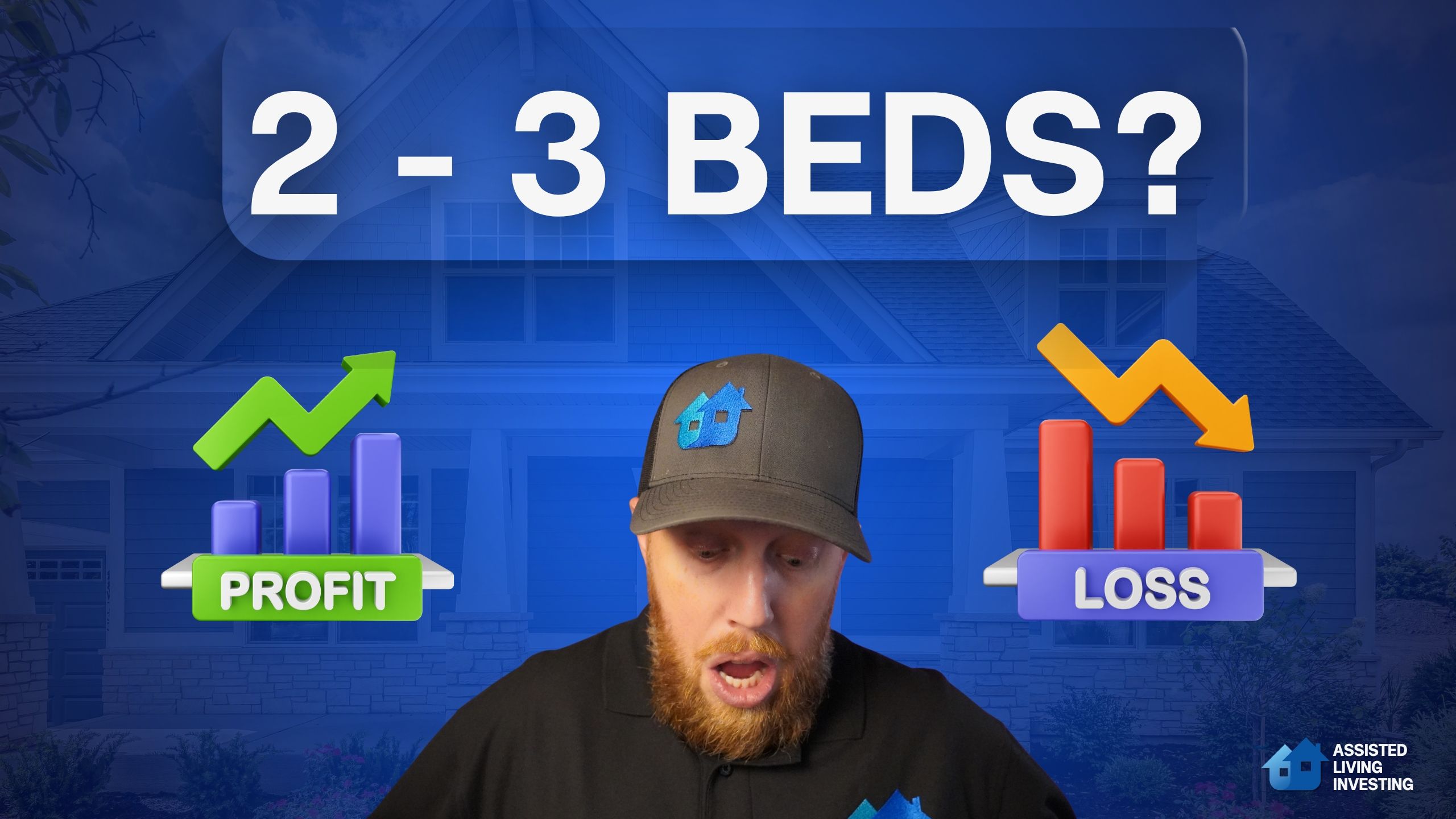
Let’s talk about a question I get all the time:
👉 “Can a small 2–3 bed care home really be profitable?”
The short answer: Yes...
But you need the right setup, strategy, and mindset — because while a small home can work, it’s not the best fit for everyone.
Check out this video, too:
Why This Matters
A lot of first-time assisted living owners think that starting small means easier and cheaper. And while that’s partly true, small homes have big trade-offs in time, income, and flexibility.
So, let’s break it down step-by-step so you know exactly what to expect.
💡 Step 1: Use a Living Caregiver Model
If you want a small home to be profitable, you’ll likely need a live-in caregiver — maybe even you.
Here’s why:
-
Labor is your biggest cost.
-
Living on-site means you don’t need full-time staff.
-
You can pay yourself twice — once as the caregiver (W2) and again through profit distributions as the owner.
✅ Pro tip: Talk to an accountant about your tax setup. If you own the real estate, there could be extra benefits.
💰 Step 2: Control Costs Like a Pro
Smaller homes mean more control over expenses — and that’s a huge advantage.
You’ll be able to manage things like:
-
Groceries & Supplies — no overbuying or waste.
-
Utilities — lower bills due to fewer residents.
-
Insurance — cheaper premiums (work with your insurance broker for quotes).
🏠 Step 3: Take Advantage of Owner-Occupied Funding
This is one of the biggest perks of running a smaller home.
If you live in the property, you may qualify for:
-
FHA loans
-
VA loans
-
Other low-down-payment programs
That means you could get started with as little as 3–5% down, compared to 15–30% for commercial or SBA loans.
💡 Translation: Easier to get in. Lower upfront costs, just make sure it's an option that you can actually pursue.
📜 Step 4: Keep Legal & Compliance in Check
Even if you’re unlicensed, you still need to protect yourself.
Here’s how:
-
Form an LLC — separates your personal assets from the business.
-
Create a lease agreement — between your property company (PropCo) and operations company (OpCo).
👉 You can grab a free lease agreement template here: Lease Agreement Template! -
Get proper insurance — and check if your city or county requires a business license.
⚠️ Always talk to an attorney. A few hundred dollars now can save you thousands later.
🚫 Why You Shouldn’t Do a 3-Bed Care Home
Okay, let’s pump the brakes for a second.
Here’s why I don't recommend this model for most people 👇
1. Limited Income Potential
With only 2–3 residents, your income ceiling is hard.
If you charge $5,000/month and one person moves out, your income drops by 33%.
That’s a huge hit.
2. No Time Freedom
Living in the home means you’re on-call 24/7.
You eat, sleep, and work in the same place.
Even when you rest, you’re still “on.”
That can get exhausting fast.
3. No Room to Scale
Larger homes (10+ beds) give you more revenue and stability.
You can afford staff, take time off, and build real financial freedom.
⚖️ Step 5: When It Does Make Sense
A 2–3 bed care home can still be a great fit if:
-
You want to test the model before scaling up.
-
You can live on-site and handle the caregiving role.
-
You want to serve a small, family-style setting with hands-on care.
It’s a great learning experience and can be your first stepping stone into larger facilities.
🧭 Recap: What You Should Know
✅ You can be profitable with 2–3 residents.
✅ You’ll likely need to be a living caregiver.
✅ You can save with owner-occupied financing.
✅ You must protect yourself legally and financially.
❌ But… it’s not a passive or scalable model.
If you want real time and financial freedom, start bigger — 10 beds or more.
🎯 Next Steps
-
Download the Free Business Plan Checklist! Build your foundation right — plan, underwrite, and map out your path.
-
Need help figuring out where to start? Join the next Roadmap Challenge and build your launch plan with me.
💬 Final Thought
A 3-bed care home can be profitable — but it comes with big trade-offs.
Start small if it helps you learn the ropes, but think bigger if your goal is financial freedom.
Show full transcript 👇
Transcript
00:00:00 - 00:00:52
Today we're diving into a question I get all the time. Can a three bed care home actually be profitable? Hey friend, I'm Brandon Gustafson. I help first-time assisted living entrepreneurs launch profitable, purpose-driven businesses in 12 months, creating prosperity, purpose, and peace in their lives. Make sure you hop over to assistedlivinginvesting.net and stick around until the end of the video. I've got a special offer just for you to help you get started on your assisted living journey. All right,
00:00:31 - 00:01:23
let's talk about it. Can a two or three bed care home actually be profitable? The short answer to that question is yes, but there are a ton of pros and cons. So, let me break it down for you here in this video. Number one, you might want to consider a living caregiver model. If you want this to be profitable, you're probably going to be needing to give a lot of time and effort into this business for it to become profitable. And that means there's going to need to be a living caregiver,
00:00:57 - 00:01:45
possibly you being that living caregiver. The reason for that is it's going to reduce your staffing cost. That's the biggest cost, the biggest expense when it comes to assisted living. So, that's a huge one. And so, if you do that, you're paying yourself to be the living caregiver. Uh you're you're providing that care and you don't have to hire other people. All of a sudden, your labor costs get shrunk. You're paying yourself the money that you would like to make for it, which is
00:01:21 - 00:02:11
going to be great. and you could potentially pay yourself twice as well. You get paid as an employee that's doing the work and doing the caregiving and then you can also do profit distributions. So, I would encourage you to go talk to an accountant to figure out exactly how that might impact you and your tax situation. But, it's a good strategy that you could implement to be a W2 employee and then also be an owner and get some passive income that comes through that, especially if you own the
00:01:46 - 00:02:37
real estate. There could be some benefits there. So there are some potential tax advantages when you get into this, but it is a lot of work for you to be that living caregiver. So I want you to be aware of that. But if you do that, it can cut your expenses and has the opportunity for you to be profitable in this business. The second thing that I want to point out is you have maybe some smarter cost management that you can implement because you're so close to what's happening inside of the
00:02:12 - 00:03:08
facility. So that's going to be something that's really big. Smaller homes, the smaller they are, the more control that you have over things like groceries and cleaning and supplies, you just are able to control that. Even me owning a 16 bed facility is going to be a lot easier for me to manage those costs than if I had a 100 bed facility because I only have 16 residents in my home. I'm able to do that. And so on a smaller scale, you just have more control over how much food you're buying
00:02:40 - 00:03:30
for your residents. Making sure you're not over buying. Make sure you don't have a lot of waste. Make sure, same with supplies. You want to make sure that you do that and you have more of an ability to do that. You still have to meet some of those requirements that amount of things you have to have on hand and in the event that you have a survey that comes to your facility, but the volume of it is significantly different. Three versus 16 versus 100. you're going to see that it's just very
00:03:04 - 00:04:02
very different. Uh and and you have a lot more cost control when it comes to that. Your insurance will probably be cheaper as well because you have fewer residents. It's it's a smaller property. I wouldn't say that it's proportionally um lower than it would be in a 16 or 100 bed facility. This is not a, you know, it's a $100 per month per resident that you have in in your facility type of a thing. But you might be, you know, a 16 bed facility. Maybe you have $2,000 in insurance payments per month. And then
00:03:33 - 00:04:24
if you're down to three residents, maybe you're looking at like $1,000 to $1,200. I'm I'm not giving you a direct quote. You want to talk to an insurance broker to make sure you get that for your situation, but you could see something that is quite a bit lower and that is a a cost savings for you. So, that's something that you would want to take into consideration as well. I would also say when it comes to funding, when you're doing a smaller care home like this, it opens up a few more funding
00:03:58 - 00:04:57
opportunities. You can be owner occupied, which opens up opportunities for things like FHA funding or VA funding or some other loan programs that allow you to have something that is a lower interest rate with a lower down payment and allow you to get in. So, that's something that you want to take into consideration in these smaller homes. Whereas something like what I have where it's a 16 bed and I don't live there. I can't get that owner occupied financing. So if I do an SBA loan, I'm probably looking at around 15%
00:04:28 - 00:05:20
as a down payment. 15 to 20% to be realistic. Or if I'm going to do something that is more conventional, I'm probably looking at 20 to 30% as a down payment. So that it is significantly more. Whereas, if I own this home or I'm going to buy a home and I'm going to live in it, um I could do something that's like three to 5% down and that is a significant cost savings in the amount of money that it takes to get started in this. So, that's something that I want you to take into consideration as well
00:04:54 - 00:05:36
that you could probably get into this a little bit easier with less money if you want to go this route. Okay? So, that's an important piece for it, but I'm going to stick around a little bit. Don't take that as, "Oh, cool. I can do this. Perfect. Turn off the video. I'm good." You need to make sure you wait until the end because I'm going to tell you a little bit about why you may not want to do this. Don't don't jump into this just saying, "Oh, cool. Brandon said that,
00:05:15 - 00:06:05
hey, you know, I could do this. 3% down. We're we're in a good spot." Pump the brakes. Stick around till the end of the video and let's talk about that a little bit more. The other thing that I would say is in these smaller homes, you can be unlicensed. When you start creeping up to six plus beds, that's in in most states, that's when you're going to have to become licensed. And when you're unlicensed, you can save money because you don't have to spend the thousands of
00:05:39 - 00:06:30
dollars to become licensed. Um, I always suggest that you still follow the licensing process, even if you're going to not be a licensed facility. It's a good practice for you and and then you have high quality care and really good mechanisms and policies and procedures in place to provide the care to your residents. But if you're going to be this small of a home, you don't need to be licensed. And that can save you quite a bit of money as you're getting into this as well. So, that's that's a huge
00:06:05 - 00:06:58
cost savings for you. Um, that I want you to be aware of. The third big thing that I would say that's beneficial with these types of homes is the structure and the compliance. Like I mentioned, you're not going to have to be licensed. So, that's good. But, there are still things that you should be doing as you're trying to move into this phase of becoming an unlicensed care home or a small facility with two, three, four, five, six beds. Some things that I really want you to make sure that you're
00:06:31 - 00:07:43
doing. Number one is I'm not an attorney. So, make sure you go and talk to one. Um, so this is not legal advice, but I would suggest that you set up an LLC. This will protect you you from all legal and liability situations. LLC stands for limited liability company. Okay? So, that means that everything that is inside of that LLC is going to be that's where the the liability is limited to. And so you're not going to have to worry as much about um getting in trouble come somebody coming to sue
00:07:07 - 00:07:59
you for your personal assets and things like that as long as you treat it correctly. Now in a situation where you're a living caregiver and you have this small home and you're in the home consistently that there may be a bit of a gray area. So talk to an attorney. Make sure you understand what the implications are there because if it is your place of residence and people are living there and something happens, how is that going to work? So, you want to make sure that you understand all of the
00:07:33 - 00:08:30
complexities that go into this. So, hire an attorney. Save yourself a bunch of time and headaches potentially down the road. It it is absolutely worth spending a few hundred, few thousand dollar to make sure that you have a good solid legal plan in place. You will be so happy you did. We have dealt with legal situations with the past with our residents and it's hairy. It's it's really difficult to work through. If you'd like to learn a little bit more about that, type in legal down below and
00:08:01 - 00:08:49
I'll see if I can share a little bit of that story with you. So, type in legal if you'd like to hear a little bit more about that story. Um, next thing is you should have some kind of a simple lease agreement in place. Again, I'm not an attorney. Go talk to one. But between the landlord, and that could be you, you own the property or somebody you're leasing it from. But between that landlord and the business, you need to have that. You can actually I have a free template for you if you go to
00:08:25 - 00:09:15
assistedlivinginvesting.net/lease-aggreement. We'll link that down below for you. You can go and get that free template. It's something I worked with my attorneys on and we'll give you kind of a leg up in and how you want to set that up. But this is an agreement between landlord business and the operational business. What you would call a propco and an opco. That's what you're looking for here. Okay. So go make sure you set something up like that. Having the proper entity structure in place and
00:08:52 - 00:09:41
then having proper lease agreements is going to protect you a lot when you get into this as well. And I would make sure that you have the proper licenses. and even an unlicensed home where you don't have to be a licensed assisted living facility or care home in your state. You're probably going to need to have some kind of a business license in the city or the county. It's not always required, but you want to make sure that you have those things in place just in case it is that you are properly
00:09:17 - 00:10:06
displaying any licenses that are required so you don't get into any trouble when somebody makes some kind of a complaint. So, make sure you have those things in place. Make sure you have proper insurance. um you need to make sure that you stay compliant because if not then you're going to get shut down. You could have fines. There could be a litany of of problems and you want to avoid that. So, make sure you are still following the rules. Even if you're going to be an unlicensed facility, make sure you understand
00:09:41 - 00:10:34
exactly what that means in your state. It's going to allow you to be a lot more successful that way. Now, on the flip side, I want to give you a few reasons why you should not be doing this small two or three bed care home. I want you to pump the brakes because I personally don't think that it's the best idea for you. Um, if I were to advise you, if I'm your coach and and I would love to be I wouldn't do this. I would have something that is larger. I personally will not look at anything that is less than 10
00:10:08 - 00:10:58
beds, but I know people that are successful doing smaller homes. It's just for me, it's a comfort level. So, my advice to you here on why you should not be doing this is there's limited income potential here. Um, I have an underwriting calculator. Go to assistedlivinginvesting.net. It's a big blue box at the top right corner. Go grab that thing and it will help you out as you're trying to move things along on your path to launching your assisted living business. But with only two or
00:10:32 - 00:11:39
three residents in a home, there's a really really hard stiff ceiling on what your revenue is going to be. Um, so if you are charging people $5,000 per month on that, it seems like a lot, right? Two residents, that's $10,000. Three residents, that's $15,000. But if one of those residents leaves, your income drops significantly. Let's say you're charging $5,000 per month. You've got three residents in there fully occupied. You're generating $15,000 in income. Sounds great. But if you have just one
00:11:06 - 00:12:02
of those residents leave, your income goes from 15 down to 10,000. That's a 33% reduction in the amount of income that you have. and your profit, your revenue that you're getting, the the profit that's there is going to come from that $5,000, that person is no longer there, potentially not even all of it. So, you can see like if you do that and you have just this fluctuation, as much as I would love for you to be 100% full, and it's certainly possible, I would never plan on that when you're
00:11:33 - 00:12:29
doing the underwriting. So, the chances of you dipping into a spot where you have a resident pass away or move or or need to go to a higher level of care and having multiple of those happen consecutively. Like we have had instances where we have had two or three residents in a 3 4 week period have to leave for whatever reason. And if that happened to you in a two or three bed care home, all of a sudden you don't have any income, but you still are going to have to pay for your staff and your
00:12:02 - 00:13:01
insurance and all of those types of things. is something that you want to make sure that you're aware of. It can really put you upside down fast. This is the biggest reason why I would say you got to pump the brakes on this and why I don't recommend doing a three bed care home. Um I I really don't I and why I would do 10 plus beds. And it's because the opportunity to scale is so much better when you have a larger facility. the opportunity to generate more income and and put yourself in a better
00:12:31 - 00:13:22
financial, more stable situation. It's better when you have more beds. So, this is why I always suggest that you go bigger. Um, go to the the max amount that you can for the type of license that you're going to get and the max amount that you can do in the home that you have in the property that you have because it is going to benefit you. So, make sure you're you're doing those things and finding ways to add more money because this is a very expensive business to run. And so, you want to
00:12:57 - 00:13:46
make sure that you're aware of that and the implications that can happen if if you don't have enough money. It it can be really really hard on you. And the other thing that I want to point out to you is reasons why I wouldn't do this is the lifestyle trade-offs that you're going to have. If you are a living caregiver, you don't get a lot of free time. You have to be on all the time. Even when you're sleeping, you got to be on call. You're the person that's there.
00:13:21 - 00:14:07
You're living in the facility. If if you want a break, you're going to have to hire somebody. And that's going to be kind of expensive to hire somebody. It can be really hard to do that. It can feel like you never leave work because you don't you're you are living in the facility. You're always caring for your residents. And some of you, you're you're like, "That's fine. I'd love to do it." But like, do you want to do it for the next 10 to 15 years and
00:13:45 - 00:14:36
perpetually and something like that? It's just hard. I'm not saying that you can't do it, but I'm just saying you need to think through this because it can be a lot of work. It's very heavy type of work. You're dealing with people that sometimes are getting close to end of life and that is really hard. You create these attachments with people and it's really hard to see them go and you don't get a chance to just walk away from it when when you're the living caregiver when you're doing that type of
00:14:10 - 00:15:04
a model. So, it's really really hard to do it. Whereas, if you have more residents, you can have more staff. you can give yourself more of a break. You could still be a living caregiver in a large home. The facility we purchased in Idaho. The the previous owner actually lived there with their family for 2 or 3 years. This was 20 30 years ago, but they they did that with 10 12 residents in the home. So, you can do this in a larger home. It's just in a smaller home. You are the only person. You got
00:14:37 - 00:15:26
to be very very careful with how you do this. So, I want to quickly recap for you. You can do this. Ultimately, you can do this. you can be profitable. It it can work for you, but you're probably going to need to have some kind of a living caregiver model. Something that you're going to need to consider. You can save money because you have smarter cost management. Um, you have a little more control over what's going on, which is great. But I would still suggest that you have the proper structure in place
00:15:02 - 00:15:48
so that you protect yourself and and your assets and your personal assets and everything is the way that it needs to be. You need to also understand there is a pretty hard cap on your income potential that it's pretty limited. So, you need to be aware that that's something if if you're in this for the money, doing a smaller care home probably not going to be the best fit for you. It could be a great way to wet your feet for sure, but it's probably not going to be the money-making machine
00:15:25 - 00:16:19
that you're hoping for to create that time and financial freedom. Speaking of the other thing that you need to be aware of is it can be a huge time suck. It's going to be a huge lifestyle trade-off. So, if your goal in getting into assisted living is create time and financial freedom and a lot of you that's what you want, this model, this two or three bed care home, it is probably not going to be for you. Now, I mentioned at the start of the video that I have a special invitation for you. I'm
00:15:52 - 00:16:50
hosting a live challenge. It's coming up soon. If you need some help building your roadmap to start you on your assisted living journey to help you get started, go check it out. Roadmapchallenge.com. Um, I I hear from a lot of you, you don't know how to get started. Like, you don't even know where to start. You are confused and scared of funding and licensing and and you just don't know what to do. This challenge, it is intended to help you out with that. It is a 5-day live experience. Um, it's
00:16:21 - 00:17:11
going to help you build your personal roadmap to know what steps you should be taking, give you the clarity and the confidence to help you move forward and launch your own assisted living business. So, make sure you go check that out at roadmapchallenge.com. If you found this video to be helpful, make sure you like the video, subscribe, and ring the bell as well so you get notified every time we put out content like this. We go live on Tuesdays and we go live on Thursdays. Would love to help you out as you are trying to launch your
00:16:46 - 00:17:42
assisted living business and YouTube is a great way for me to do that. The challenge is the other way. Go to roadmapchallenge.com. Also, go check out the profitable assisted living book at the alibook.com. We will link all these things down below for you to help you launch your assisted living business using my fivephase framework to to help you make progress and reach your goals of time and financial freedom. Curious about assisted living? At assisted living investing, I help firsttime assisted
00:17:14 - 00:17:57
living entrepreneurs launch profitable purposedriven businesses creating prosperity, purpose, and peace in their lives. And remember, it doesn't take a lot, just a little bit. Just keep going step by step by step. But I promise you if you do and you are consistent and persistent, you are going to be successful. Thanks for watching and have a great day. [Music]
Download Your FREE Calculator
Stay connected with news and updates!
Join our mailing list to receive the latest news and updates from our team.
Don't worry, your information will not be shared.
We hate SPAM. We will never sell your information, for any reason.