Zoning Said NO to Your Assisted Living Home. Now What?
Aug 12, 2026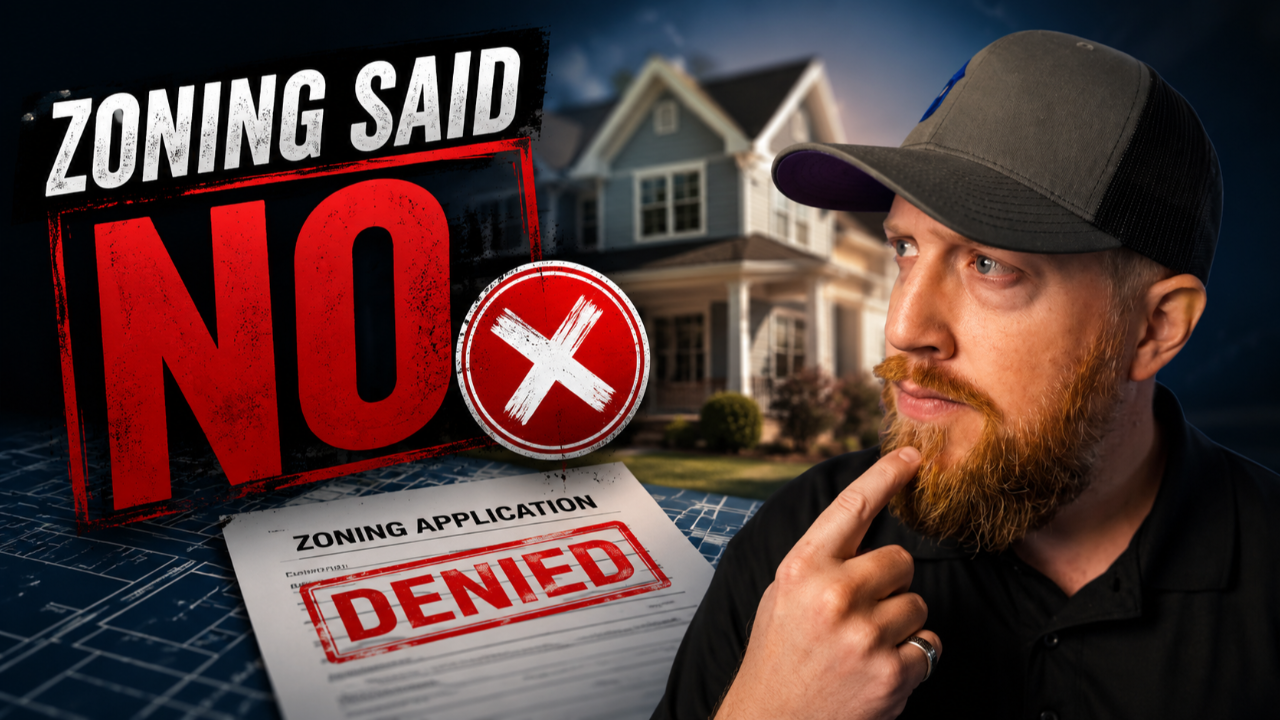
Getting told "no" by your local zoning office can feel like the end of the road. I know because I've been there, and I've also helped many students work through the same challenge. The good news is that a "no" doesn't always mean your assisted living dream is over.
Want the full breakdown? Watch the video below👇
A zoning "no" is not always the final answer
One of the biggest mistakes people make is accepting the first answer without asking more questions. Many city planners hear the words "assisted living" and picture a large commercial facility instead of a small residential care home.
I've found that the way you explain your business makes a huge difference. Instead of using industry terms or acronyms, explain that you're creating a small care home where residents receive help with daily activities in a residential setting.
✅ Describe your home in simple language before asking zoning questions.
The words you use can change the conversation
When I first contacted municipalities, I received completely different answers depending on how I described the business. Once I explained that it was a residential care home with a limited number of residents, the conversation changed.
People in zoning offices may not understand terms like ALF, RCFE, or residential assisted living. They respond much better when you explain what actually happens inside the home.
💡 Clear communication often opens doors that confusing language keeps closed.
Learn the difference between "no" and "not this way"
Sometimes zoning officials aren't saying your project is impossible. They may be saying it requires a different process.
That process could include:
✅ A special use permit
✅ A zoning variance
✅ Additional approvals
✅ Different paperwork
I've worked with students who were initially told no, only to discover that there was another path available after asking follow-up questions. It took patience, but they were eventually able to move forward.
Don't be afraid to politely ask for clarification. A respectful conversation can reveal options you didn't know existed.
Choose the right assisted living model before talking to the city
Not every assisted living business follows the same rules. Before contacting your municipality, know exactly what type of business you want to operate.
For example, you might be planning:
✅ An unlicensed care home
✅ A licensed group home
✅ A larger residential assisted living facility
Each option may have different occupancy limits, licensing requirements, and zoning rules. If you aren't clear about your plan, it's much harder for city officials to give you accurate guidance.
The more prepared you are, the more confident your conversations will be.
Look beyond your first city if necessary
One lesson I've learned is that neighboring cities can have completely different zoning rules.
I've seen municipalities only a few miles apart handle residential assisted living very differently. One city may require extra approvals, while another may welcome the same type of care home.
When I started my own business, I even chose to operate in another state. That decision helped me build stronger systems, hire great people, and grow my business with confidence.
💡 Don't assume one city's answer applies everywhere.
If your first location doesn't work, explore nearby cities, counties, or even another state if it fits your goals.
Build your foundation before asking for approval
Many municipalities will eventually ask about your business plan, your residents, and how your home will operate.
If you've already completed your market research and business planning, those conversations become much easier. You'll know exactly who you serve, how many residents you'll have, and how your business will operate.
That preparation gives you confidence and helps city officials understand that you've done your homework.
Wrap Up
Getting told "no" by zoning doesn't always mean your assisted living business is impossible. Often, it means you need to ask better questions, explain your business more clearly, and explore every available option. Stay patient, stay professional, and keep moving forward one step at a time.
If you need help creating a business plan for your assisted living business, check out the Free Business Plan Checklist.
And if you’re ready to figure out your next step, join me for the next Roadmap Challenge where I’ll walk you through how to get started.
Show full transcript 👇
Transcript
00:00:00
Have you been trying to get started in assisted living and you know that you need to talk to your local municipality and every time you go reach out to them or you look online, the answer that you get is no. This is not allowed in residential homes. You can't do it here. Big X, you know, red X, you can't do it. And you're just like now you're confused and it's stopping you and you're like, is this is this even worth it? Should I be moving forward with assisted living or not? Should I just move on to the
00:00:26
next thing? Well, in this video, zoning says no. Can you still build your assisted living home? I'm going to help answer that question for you, help you navigate this, and help you see, hey, maybe there is a way to get around this and still get started with your assisted living business. So, if you're interested in learning more about the zoning process and how to navigate it a little bit more successfully and get started with your assisted living business, this video is going to be for
00:00:51
you. Hey friend, my name is Brandon Gustafson with Assisted Living Investing. I help healthcare workers start their own assisted living business so they're not stuck trying to figure it out and they know exactly what they should do next. Before we get started, hop over to assisted livinginvesting.net. Got a few resources for you over there uh to help you out along your path to launching your assisted living business. And with that, let's get into it. How do you start an assisted living home when
00:01:15
zoning tells you no? I have seen this in comments all over the place. Like, I have this home. I want to do it. And I talked to the municipality. I talked to zoning and they said, "You can't do it in residential homes. Sorry, you just can't do it." And I've actually run into this with a few of my students where they have that conversation. I actually ran into this myself when I was getting started. Um, you reach out to the municipalities. It's what you should be doing, right? When you get to that
00:01:43
phase, there are things you need to do before you get there, by the way, if you want to learn more about that type of foundation. I'll tell you more about the things that you should be working on before you get to the property. But if you have the property and you're moving forward and zoning tells you no. So let's talk about this. Um what zoning actually means for assisted living. I want to try to break this down in simple terms. When I was getting started, I knew I wanted to do assisted living, but
00:02:06
I wasn't sure how to get started. And one of the first things that I did, and again, this wasn't like the best thing for me to focus on in the beginning, but is what I did when I was getting started. I reached out to about a dozen municipalities here in Utah where I live. I was like, "Okay, I want to do assisted living." And so I reached out, just cold called all these municipalities, all of these city planners. Hey, I want to do assisted living. What's the process like in your
00:02:31
city to get that started? And the responses I got varied from, you can't do that here, like why would you do that in a residential home? Like that's not possible to, yeah, we can do that. It's super easy. And what I found through the process is the words that I used were very very important because if I just said,"Hey, I want to start an assisted living home in this area, like this is the address that I'm thinking of. Can I do that?" Their immediate thought, because they're not in the same headsp
00:03:04
space as me, their immediate thought is the big box type of a facility. And their initial reaction is, "No, you can't do like you're not going to knock down the home and turn it into that. Like that's a commercial zoning area. Like it's just no, it's not going to work." Right? That is what so many people think because they're not in that phase. So what I found in my conversations with municipalities was I had to be very specific in the way and careful in the way that I worded my
00:03:36
question. I would have to say something like, I want to start a residential assisted living facility. Basically, it's a care home. So, we would have people come in. You know, it's smaller. It's no more than 10 or whatever the number was. There's no more than 10 residents in here. And we're just providing care. This isn't clinical. They're living there. We have staff that are coming in and out, but these people, they don't typically uh drive. Like, there's a simple way to explain this to people,
00:04:03
and they're like, "Oh, I see what it is." And then it starts the real conversation. Because if you use the wrong words, the immediate reaction, like this is the reason why so many of you actually get told no, is the words that you're saying to describe it when you ask it. People are like, "No, like that's that's not going to work." So that's the first mistake that you're making. Okay? So use better words to describe what you're doing. And I I did this myself. It took me a while to
00:04:28
figure out how to talk to people about it and ask the right questions, but once I did, I got better answers. Okay. Now, there's also when you're talking to them and you've clarified that and you've used the right words, there's a difference in what they tell you as well. So, you need to you need to listen for this. There's a difference between this is not allowed and this is not allowed that way. It's very subtle and you might have to push a little bit more to see if there's
00:05:03
a that way in the response from them. Okay? Because what you might find is it's actually okay to do it in a specific type of zoning, but it may require a permit or a special use permit. So, what you have to do is learn how to navigate like the yes versus a no versus a maybe. So, one of my students, um, she's actually doing this in Utah, which is great for her because I'm a little bit more familiar with it and been able to like go and look at her house or and things like that, which is
00:05:36
a fun experience. But, as she's been going through this process, she has gotten a lot of conflicting messaging from the municipalities that she's been working with. She's actually looking at doing this with two homes. And it's interesting because these municipalities are right next to each other and they have very different rules around how this works. And so what we've learned is how to navigate what they're actually saying and how to push back on certain questions. And so she's in my success
00:06:04
system program. And so what happens there is she has questions and things. She's like, "This is what they said. How do I respond to this?" Right? And so I'm giving her a lot of direction on her specific situation on how to to get into that. If you're interested in the success system program, just type in success. by the way, we'll get you a link to it. But anyways, what we found is we can push back on some of the things that they come back and say. And what they tell us when they say no or
00:06:32
no, I don't think we can do that. The I don't think we can do that, it opens up a door and we want to ask for clarity. And what we have found, it's taken us a few months, but what we have found is there were special use permits that we could do. there are special circumstances we can navigate and it really does come back to having a back and forth with people. So, just having that first initial conversation and getting a no. It could be that they're just having a bad day or it could be
00:06:59
that they're lazy or that they're new and they don't want to look all this stuff up and it's just easier for them to say no. This is the second mistake that people are making is they just take a no as a blanket answer. I would also suggest if you get a yes as a blanket answer, you document that, but then you do more research on it and make sure you understand what it is. Okay? So, dig deeper. Always dig deeper and get documentation. But what we have found as we've been able to dig deeper and deeper and deeper
00:07:26
with this is we've been able to navigate some of the other regulations and some of the other things and roadblocks that were in the way and we've been able to remove them and now we're actually moving forward. Uh, I just had an email or message from her yesterday and it sounds like we're working through some paperwork so we can get the approvals in place from a zoning perspective that'll allow us to move forward and then we'll be able to to work on getting the license at that point. So, it's taken a
00:07:52
while. It can take a while, but that's another big thing is you have to push back a little bit. You have to navigate. You have to have real conversations with people and give them more clarity. That's another big reason why people when they hear no, they just are like, I can't get around this. Sometimes you got to put a lot of effort into it. And when you do, you're going to find that you can actually figure things out with them. Now, that's not a guarantee. Doesn't always happen, but you may be
00:08:19
able to navigate things. You may be able to get a special use. You may be able to do some resoning. You may able to do something extra to help you move forward and get this in place. Okay. Now, there are, I would say, three paths to getting into an assisted living as well. And this piece of it can also open up a few different doors for you from a zoning perspective. These three paths are you could have a licensed assisted living facility, you could have a group home, or you could have an unlicensed care
00:08:49
model. Okay? And each of those are also going to have different classifications. So, if you're using the wrong words, you may find that they say no because they're thinking, "Oh, they want to do a commercial building. You can't do that." Or they're thinking, "Oh, you want to do a 10 bed facility when really you want to do unlicensed and just be a four." These are very different conversations. They're very different types of facilities. You need to figure out what
00:09:15
do I want to do? And once you figure that out, then you're going to be able to move forward with asking the right questions. So, an unlicensed facility, it's typically going to be capped at 4 to 6. Kind of depends on the state what you can do there. They're not licensed. They could have less restrictions, especially from a zoning perspective. So, if you wanted to go that route, you actually can typically fit those in. You just have to know how to ask the right question. The next one is a group home.
00:09:42
And these are typically licensed, but they're also for like four to six residents. So there may be something in the zoning code that says, "Well, you could do this if it's unlicensed, but once it becomes a licensed facility and it's licensed by the state, then we can't do that." Or they say, "Well, if they're unrelated individuals, you can't do that because it's kind of like renting by room and we just don't allow that with this type of zoning." But then
00:10:02
if you got the license, then yeah, you could do it. or you may find that a residential assisted living like an ALF or a RAL or RAL or whatever you want to call it RCFE whatever your acronym is in your state you're going to see that hey it's six plus and maybe that's something that hey this is a designated thing uh we actually need a lot of like some of these cities some of these municipalities they need those types of things to hit different economic uh development quotas or uh serving
00:10:32
different populations like they actually need these things And so you can go in and say, "Hey, we're actually going to have 10, 20 beds in this facility and it's in this residential setting and we are meeting all the other expectations that you have. Can we do that here?" Uh, you know, everything's good. We just need to get maybe it's a variance, maybe it's a special use permit, whatever it is, and they might be willing to work with you. So, you need to identify what
00:10:56
type of facility are we going to do, how many residents, and then you're going to have that conversation with them. Okay, so that's the third thing that people miss a lot on is identifying and like thinking through thinking to the end what does this actually look like and then using that in your leverage as you're talking through things with people. This is why you need to build your foundation because when you do your foundational work, you're going to have the answers to those questions pretty
00:11:21
quick. Okay? So, do the foundational work. If you need some help with that type of foundation, we'll get you a link to the foundation builder program. Everything we do in that program is designed with helping you get started and build your foundation so that when you're having these conversations with the city, and by the way, they're probably going to ask for your business plan. You know how to navigate them because you've thought through all of these things. Okay. Now, the next thing
00:11:43
that I want to talk about is how to find areas that do allow assisted living. So, you might be better served in looking at areas that actually do allow assisted living. And to go back to the example of my student here in Utah, the two cities that were right next to each other, and she's going to be able to do it in both of them, but they have very different views of how this works and different rules and different zoning. And so what you may need to do is go to the next town over, go to the next county, the
00:12:14
next city over, because they may have different rules than the one where you're at. Or you could look at going out of state like I did uh where I live in Utah and operated in Colorado for about five years and then we sold that facility and and now we focus on in operating in Idaho and we're looking to grow our portfolio up there and everything is is working well. But all of that to say you might need to talk to different municipalities and see does this work in this area? Check the rules,
00:12:43
check the permits, check the process there. Because just because you want to do this in a certain county or certain city and that one's telling you no doesn't mean that the one that's five minutes away is also going to tell you no. You will be surprised at what happens. You have to reach out to more people. Do not be afraid to go to a different city or even a different state. When I was getting started, I was I kind of like brute forced my way into it and like I'm going to figure this out
00:13:10
and we're going to do it. And when an opportunity out of state came up, I was like I don't care. We're going to do it anyways. and I didn't think much of it and maybe I was just too bullheaded. But what I found is that actually has worked out incredibly well for me. It has forced me to figure out how to hire really good people, how to implement good policies and procedures and standard operating procedures that are going to allow us to be successful and how to move forward with all of those
00:13:36
things. And that has been an incredible blessing for us and has allowed us to be even more successful and given us confidence now to move forward and start looking to add more facilities in the coming months. That is something that you should not be scared of either. Different city, different state. It does not need to be the thing that's down the road. The other cool thing about doing this in a spot that's a little bit further away is if you don't want to be involved and you want this to be a
00:14:05
little more hands-off, that's the way to do it because then it kind of forces you to put trust in other people. And I can't tell you enough. It it's it's incredible what that does for you. Okay? So consider that. That's something that you can do. Municipalities, the ones that are right next to each other, you will be amazed at how different they are. So just because yours says no, don't assume that the one that's just a few minutes away is also going to tell you no. Reach out
00:14:32
and ask. Okay, that's a fourth mistake that people make is they just assume that, well, this one said no, I can't do it anywhere else. That's not the case. You're going to hear that from lenders as well when it comes to giving you funding. They're going to tell you, no, we can't do it. Nobody can do it. Like it's impossible. It's not going to work. And if I took that advice from lenders, I never would have gotten started because I had people tell me that. And you know, I got told no literally dozens
00:14:59
of times. Like I lost count of how many times I was told no by lenders. Just I have been told no by lenders probably 50 times. Okay? But it doesn't matter. It only takes one of them to say yes for you to move forward with it. That's the same thing with zoning. It only takes one municipality close to you to say yes for you to move forward. So stop getting stuck on that little piece of it. All right. Now, there are a lot of mistakes and I've talked about this throughout that people make when they are asking
00:15:28
the counties. They use ALF or assisted living facility or RCFE like you use language that they don't know. They're not familiar with. They're not watching these videos. They should be, right? I mean, you should share this video with them so they understand what this looks like. That's what you should be doing. Okay? So, go ahead. Just hit the share button. Send it over to them. Anyways, you should be doing those. They are not watching this video. They're just not okay. They don't understand the words
00:15:56
that you're using. You have to use simplified versions of it. You have to use simplified phrases. You have to explain what is actually happening in the home. Don't use an acronym. Don't even use assisted living. Use care home. And what we do in a care home, we care for people. We help them with activities of daily living like showering and getting dressed and feeding them. Okay? you explain a little bit of it of what actually happens there and then it softens them up a little bit and then
00:16:22
you can have conversations and have real conversations with them. The other thing is you need to not be rude. You're going to get told no by a bunch of people. Do not take it personally. These people like they get these questions all day every day. They get tired of it. They may be rude and blunt to you. does not give you permission to do the same to them because then their entire persona becomes negative and guarded and they're not going to want to work with you and help you out. Okay?
00:16:53
So, you cannot be rude to them. You have to be overly nice and help them out and get them the information that they need and be kind. And you will be amazed at what happens when you do that and you're just nice to people, you're going to have a lot more success. Okay? So, if you avoid those two things, using, you know, your assisted living language and acronyms and things like that, and you're just not rude to them, you're going to have a lot more success when it comes to that because they're going to
00:17:19
actually be able to help you figure out who to talk to at the fire department and you're going to have more interactions with them than you think you will. So, you might as well be nice to them and build a good relationship and it will blossom into something that's going to help you out. Okay, we talked about a lot today uh about the ways to kind of navigate the idea of zoning has told you no, you can't do it. And how do you navigate that? And really, it comes down to taking a step back and looking at all your options,
00:17:45
changing the way that you talk about things and getting clear on who you want to serve and how you're going to serve that population. When you do those things, you're going to find this is not that hard. You just kind of have to navigate it and know and have patience. And when you do those things, then you're going to be successful. So, if you found this video, make sure you like it, subscribe, ring the bell, share it with your zoning person so they understand what we're talking about
00:18:07
here. That'll help out a lot. And uh if you need help, type in foundation. I help you build the foundation for this so that when you go and talk to that municipality, you can talk to them with confidence that you know what you're doing. When they ask you for a business plan, which they probably will do, I don't think they're going to read it, but they're going to ask for it. You can just give it to them because you've done it. Type in foundation. I help you build all of that stuff, help you do the
00:18:30
market research so you can identify if it's a good spot for you in the first place just based off of how many people are there that you can serve and then get that business plan, get you your underwriting and get you on your way so you can get the right property, you can secure the funding that you need and you can navigate licensing and get you started. Are you curious about assisted living but you're not sure how to get started? At Assisted Living Investing, I help healthcare workers start their own
00:18:52
assisted living business so they're not stuck trying to figure out and they know exactly what to do next. And I want to remind you that it doesn't take a lot to get started. Just a little bit. Just keep going step by step by step. And I promise you, if you do and you are consistent and persistent, you are going to be successful. Thanks for watching and have a great day. [music]
Download Your FREE Calculator
Stay connected with news and updates!
Join our mailing list to receive the latest news and updates from our team.
Don't worry, your information will not be shared.
We hate SPAM. We will never sell your information, for any reason.